Category Archives: commuting

How wide is a bike lane?

What you see is not always what you get.

I was reading an article about bike lanes recently, which claimed that the newest bike lanes in San Francisco (on Kirkham Street) were 6 feet (183cm) wide, which is the new city standard.

It also claimed that most of the existing bike lanes in the city were 5 feet (152cm) wide, which I’ll admit, I thought was cracked. I ride in a lot of bike lanes in this city, and I would eat my helmet if they were all 5 feet wide. Time to take out the tape measure!

After stopping in various awkward places around my commute, I concluded that bike lanes are the opposite of trees: the older they are, the narrower they are.

  • On Arguello and Sacramento north of Golden Gate Park: 4 feet (122cm) travel width
  • New JFK bike lanes within Golden Gate Park: 5 feet (152cm) travel width
  • According to the article above, the new Kirkham bike lanes: 6 feet (183cm)–I didn’t measure
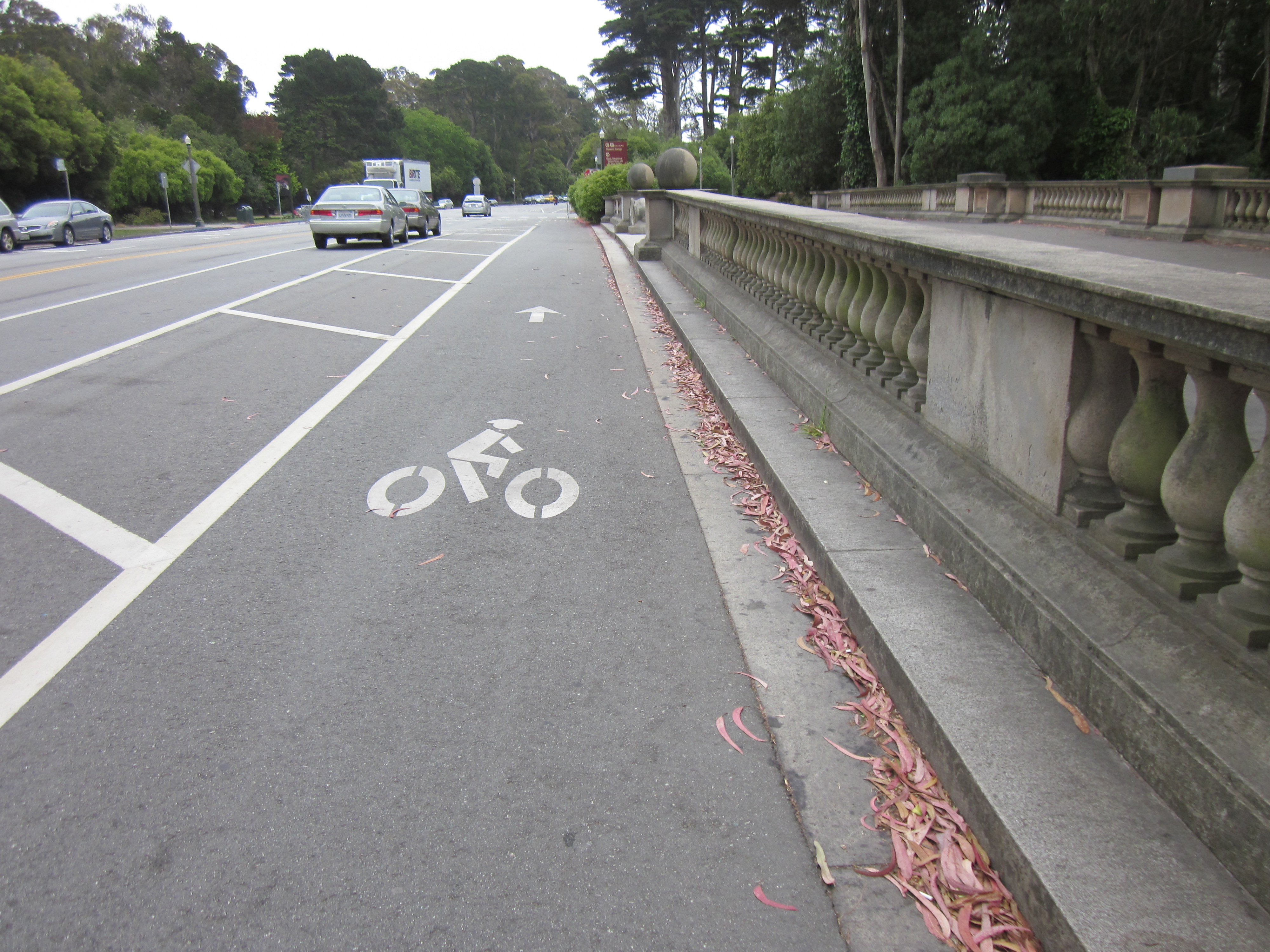
The protected bike lanes on JFK Drive rarely feel crowded.

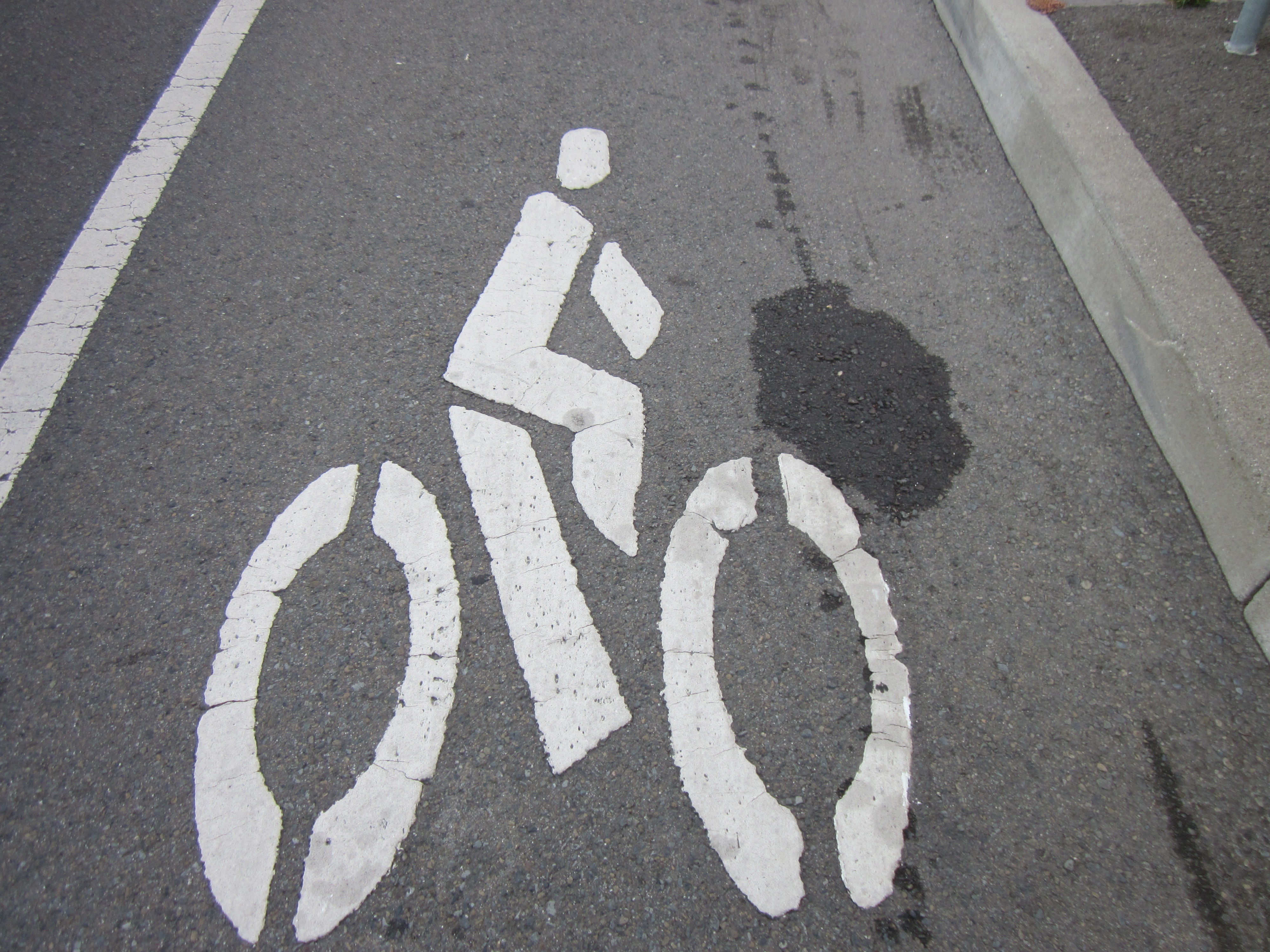
My feeling is that the narrowest 4 foot lanes are by far the majority within San Francisco right now, although admittedly I don’t ride as much South of Market, and they’ve striped a lot of lanes down there in the last few years. If the lane has a marker reading “BIKE LANE” or a picture of an un-helmeted bike rider you’ve hit a 4 foot lane for sure, although some of them have been repainted with a helmeted rider. I would guess the odds of these lanes being restriped to a greater width are pretty slim. Most of the attention right now is rightly concentrated on creating new lanes and expanding the network.

Why does it matter? Two major reasons: car doors and traffic.

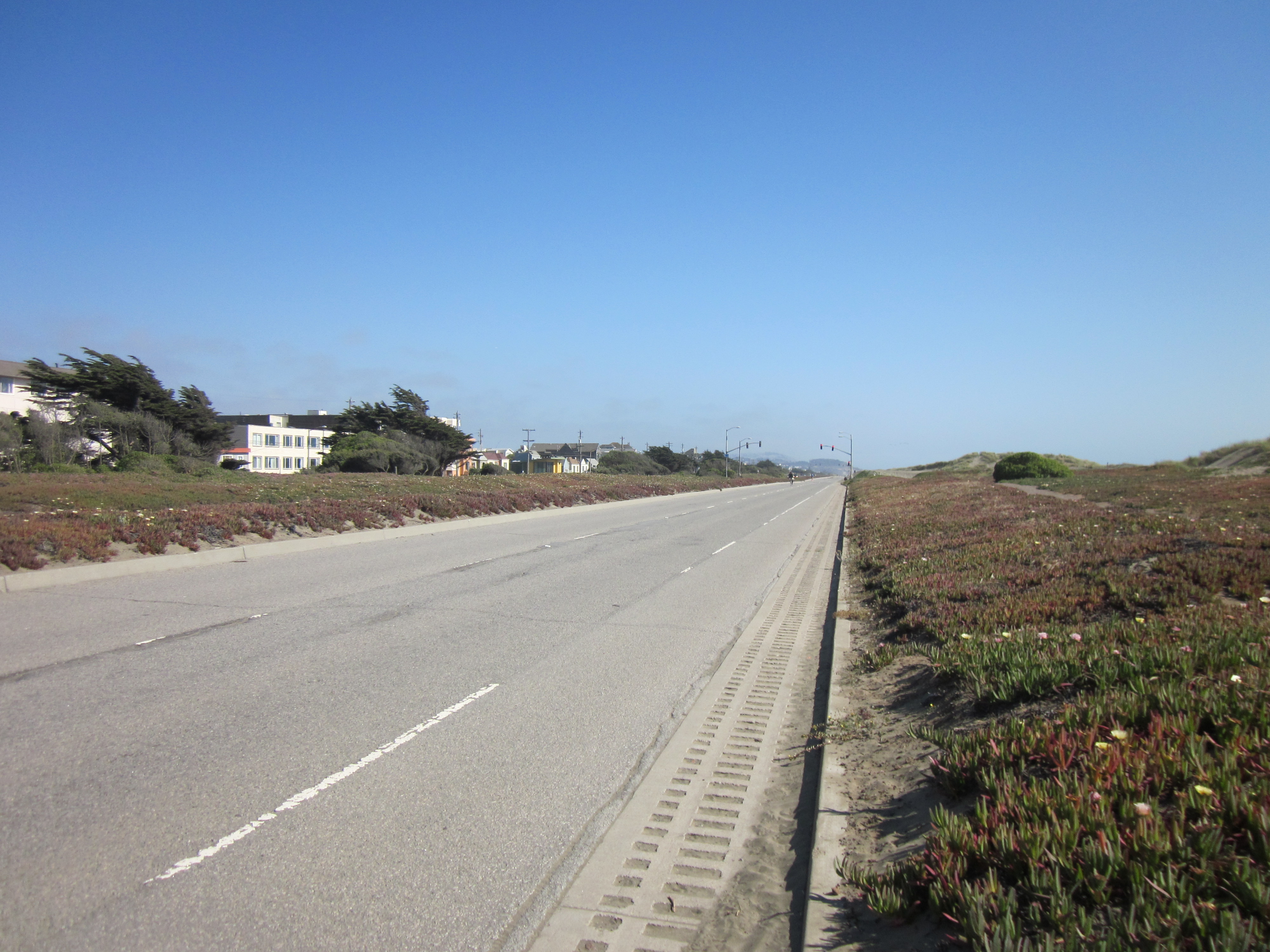
In the new JFK bike lanes, 5 feet of width is plenty: they’re right against the curb and cars park on the left, they’re protected from the door zone with a buffer zone, and so there is plenty of space for me to ride alongside my son, or for another rider to pass us.

In the 4 foot lanes in the city, and even some of the new 5 foot lanes things can get hairier.

At the dotted line, the cyclists move left and the cars turning right (if there were any) move to the right before heading into the intersection.

These lanes are primarily to the left of parked cars, and an opened door can easily cut the bike lane in half, giving a rider an effective width of a 2 foot (61cm) to 2.5 foot (76cm) travel lane. Dooring incidents are relatively low on weekdays as San Francisco drivers are conscious of bike commuters. Dooring incidents are rampant on weekends when out-of-towners drive into the city and leave their doors hanging open in the bike lanes for no apparent reason, maybe to air out their cars. It’s a mystery, and they get angry when we ask them, politely, to stop blocking traffic.

These lanes are also striped to merge at intersections, allowing cars to turn right and bicycles to move left, which is why San Francisco doesn’t have the right-hook issues that other cities do. As long as everyone signals it is a little complicated but works fine: when the line becomes dashed, turning cars move right and bikes pass them on the left to go to the front of the intersection. (Moving forward in the intersection is a safety move to prevent a car further back in queue from turning right in front of a bicycle moving straight, the dreaded right-hook.) But this merge dance results in cars blocking the right half of the bike lane: once again, the bike lane effectively narrows to half its width whenever a car is turning right. Cars can’t usually pull right up to the curb for a right turn as they would when parking, or they’d run over the corner and pedestrians, so they’re partially in the bike lane.

When a bus moves into the right lane for pickups or turns, it takes some guts (and a narrow bike) to move to the left as suggested when heading straight.

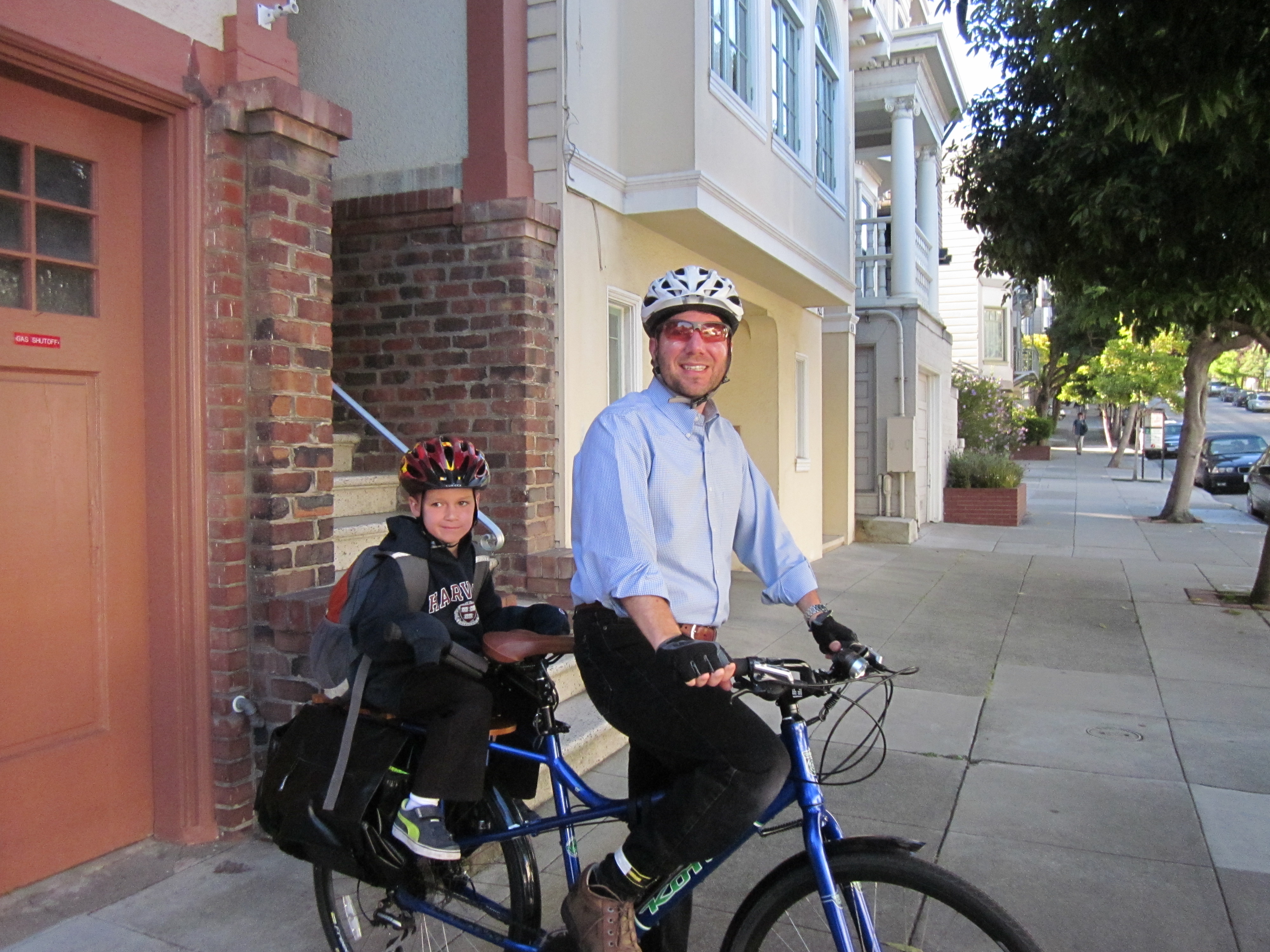
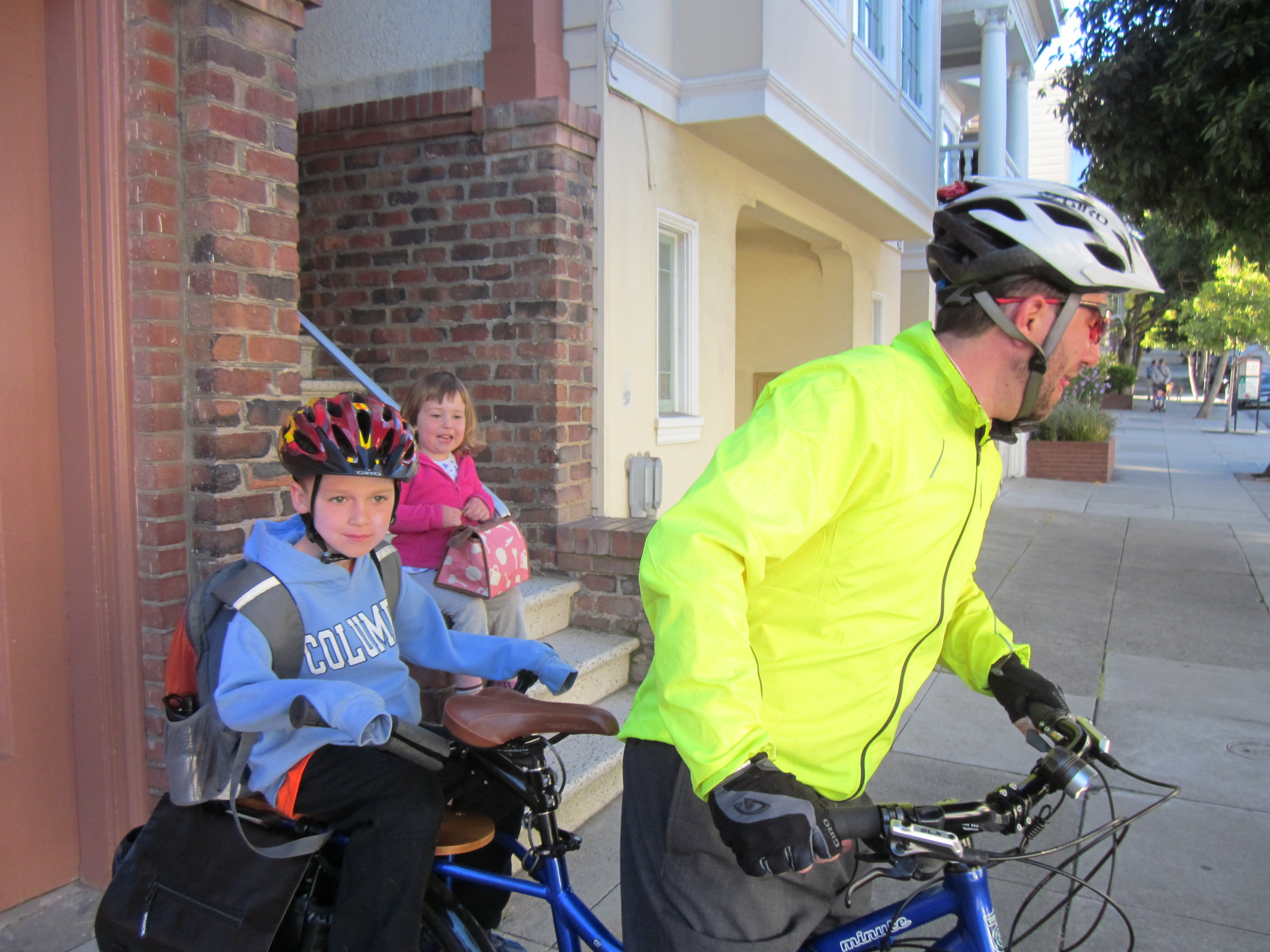
Why does this matter? Most bikes can effectively navigate a 2 foot bike lane, but cargo bikes like our Kona MinUte can be more problematic; the bags on the side hang out several inches when full, making the bike up to 25″ (65cm) wide. I prefer to keep them in the folded position while I’m riding even though they can hold less that way. Then the bike is 16″ (40cm) wide, which is no problem (or I can fill one but not the other.) Matt typically keeps both filled but is actively looking for a better replacement for the stock bags due to their width. Can you put FreeLoaders on a MinUte?

I also had real problems getting the Yuba Mundo through these pinch points when it was visiting. For a long time I couldn’t figure it out: long-tail bikes are basically the same width as other bikes and we were using the front Bread Basket for cargo, so we didn’t have the MinUte rear bag problem. Why was I feeling caught at intersections all of the time and forced to stop behind turning cars (blocking other bikes behind me)? I hated taking the lane from the bike lane when the kids were on deck; cargo bikes are slow to start when laden, and drivers understandably get a little annoyed when riders swing in and out of the bike lanes. And I was the only bike doing it.

I only recently realized that my issue was the Mundo’s Side Loaders. To keep heavy loads off the ground or carry bicycles or give kids a place to rest their feet, the Mundo has two bars sticking out from each side of the rear deck, so the frame’s total width is over 20” (51cm). If you add a pair of full GoGetter bags, the bike’s width increases to over 35” (90cm). I didn’t even have the GoGetter bags, and 20.5” isn’t that much wider than an ordinary bike, but it was changing the way I rode. And yet: I didn’t feel like the Bread Basket in front, at 19″ (48cm) was the problem, even though it was almost as wide. And Yuba notes that the Side Loaders are supposed to be no wider than the rider’s feet on the pedals. Was it just that I couldn’t see the wide load in back?

Why does it matter? We are trying to figure out a new family bike, and width is apparently an issue. Most family bikes and cargo bikes are much wider than an ordinary bike. My problem, even if it was just perceptual, was the same problem people have with child trailers in San Francisco: at 28”-32” (70-82cm) they’re often wider than the space available in the bike lane, and as a rider, you can’t see whether they’re going to make it through. We have an additional issue: no trailer on the market would fit through our narrow basement door, which when opened is just shy of 28″ wide.

Could I handle a wide bike in normal bike lanes, when I arrived at intersections where the lane is cut in half? Would it be easier if the load were in front where I could see it? These are San Francisco problems, but they’re real for us.

4 Comments

Filed under commuting, San Francisco, traffic

The reason they’re building more bike parking where I work

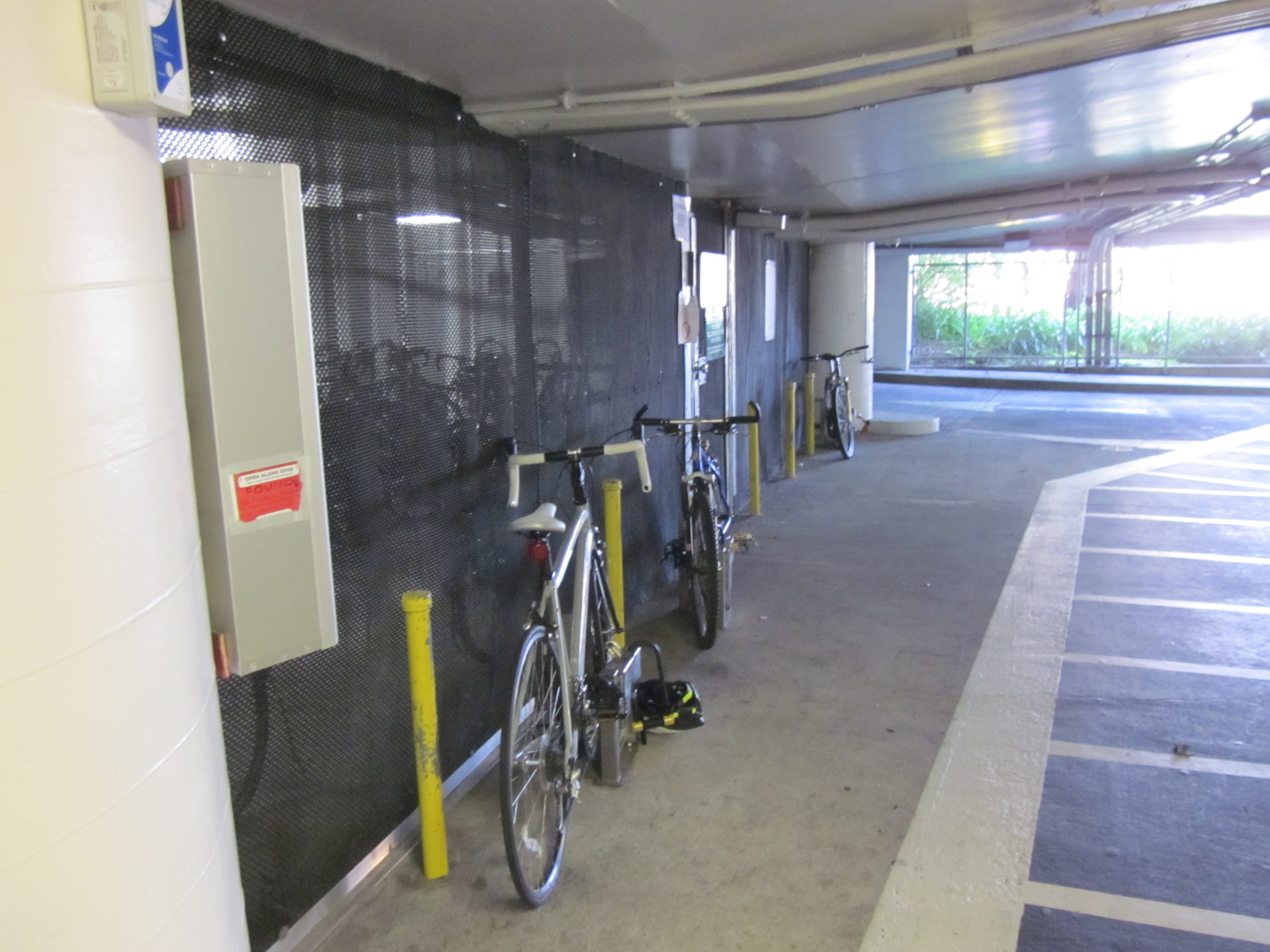
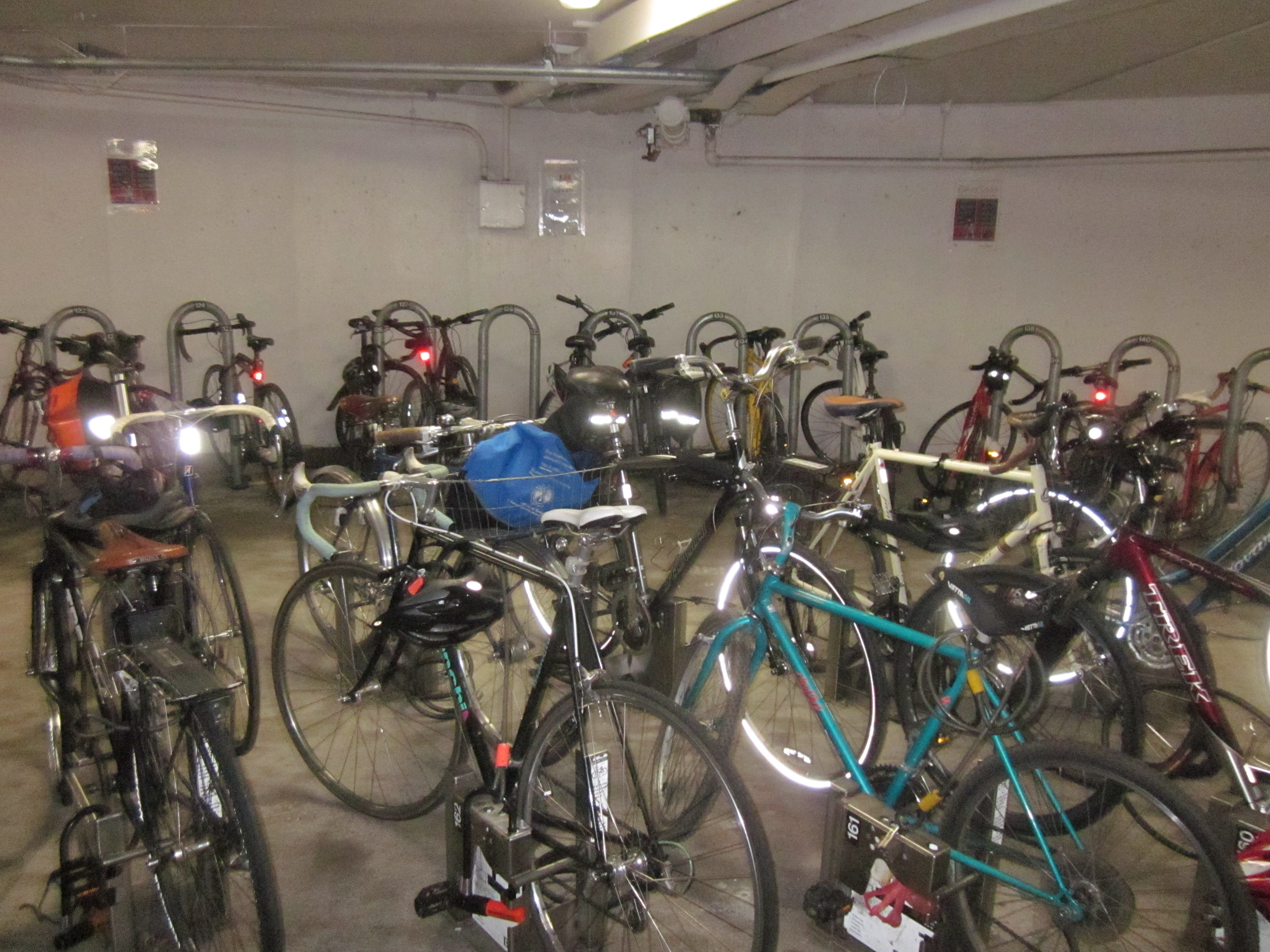
This is the main campus bike cage.

I took these photos of the two major bike cages on the main campus around 9am one morning. These bike cages can be made accessible to any campus employee who shows up at the subterranean parking garage office during the random hours they are open. They re-magnetize your campus ID to allow entry and give you a parking sticker. This is free, but it took me almost a month to get there during a time they were actually open. I assume that it’s not much easier for other people.

This is the second bike cage (slightly smaller)

All of this actually does not seem to be much of a deterrent. The bike cages nearly always look like this, unless it is later in the day, when there are even more bikes. They thin out a little late at night, but a medical center is open 24 hours a day, so there are always bicycles there. The cages are regularly inspected by campus security, and bikes left longer than a few days with a campus sticker result in a call to the owner; bikes without a sticker get confiscated in the short term, and sold after a year unclaimed. This is not long-term bike storage.

More racks outside the bike cages

Outside the main cages is overflow parking. The bike cages are monitored by parking attendants and by remote cameras. There is never enough bike parking.

2 Comments

Filed under commuting, San Francisco

Book review: Traffic; why we drive the way we do

This is a street designed for traffic.

I recently started reading paper books again, the kind found at the neighborhood library, rather than scanning the digital library and downloading books without having to leave the relative comfort of home. The paper library is still substantially more diverse than the digital library, with a much broader selection of non-fiction in particular, although admittedly it appears to offer less in the realm of evangelical romance novels (which are surprisingly difficult to identify based solely on title and cover art; this is why now I only download books that have gotten a good review somewhere, sometime).

Even though we rarely drive, it still really ticks me off that drivers park their cars right in our driveway, like, daily. Drivers who are really committed can even block the bikes.

While in this less ephemeral realm I picked up a copy of Tom Vanderbilt’s Traffic, which is one of the most fascinating books I’ve read in quite a while. For a long time I have accepted that getting on an airplane is the psychological equivalent of locking myself into a small prison cell, and I have prepared myself for flights accordingly. I drive more frequently than I fly (every week or so rather than every few months) but I hadn’t really thought before about how putting myself in a car is somewhat equivalent. I also only recently learned that cyclists call drivers “cagers,” which has a certain dark accuracy.

Riding a bike means never being stuck in traffic.

Vanderbilt discusses the many illusions of driving, including the expectation that early merging is more efficient than late merging, and the efforts of traffic engineers to reprogram people who resent late mergers and create traffic jams to force them out of merged lanes (I used to be one of these people). Even more fascinating was the illusion of queuing in traffic, where whichever lane you pick appears to be moving more slowly than all of the others. Ultimately, it turns out that they’re all moving at the same speed, but because everyone ends up waiting far longer than they end up passing—that’s what makes it heavy traffic—no one perceives the underlying equity.

This made me realize that one of the pleasures of cycling is never having to queue except at stop lights. Speaking as someone who cycled in Copenhagen, where bicycle traffic is thick, I can testify that this benefit is not an artifact of only having few riders on the road. Part of this is undoubtedly another counter-intuitive discovery by those who study traffic: slower speeds lead to faster movement; below certain speeds, there are no traffic jams. The rest is just inherent.

This is a street designed for people. Drivers complain that parklets are “too close to the road.”

It was particularly terrifying to read about just how awful most drivers are, which is something you can often ignore in the car because you’re busy being an awful driver yourself: trying to settle down kids, program acceptable music, talk to passengers, talk on the phone, or worse yet text. But I definitely notice it as a cyclist and pedestrian. Given that there is no feedback that all the dangerous things drivers do are dangerous until they actually hit something, why wouldn’t most drivers believe they’re doing a good job? Even when they do hit something, the fact that it doesn’t happen every day makes people believe the non-collision days are more meaningful. And my friends who work at power companies tell me that even people who hit utility poles argue that the pole was at fault (“It was too close to the curb!” or if seriously drunk, “The pole was in the road.”)

My husband is not a MAMIL

It was painfully familiar to read Vanderbilt’s discussion of how women end up creating and suffering in the worst traffic because of what is referred to as “serve passenger” driving. Taking the kids to school, picking up dry cleaning, doing the grocery shopping: these trips involve the most traffic—school pickup and dropoff zones are particularly notorious—because everyone needs to do them at the same time, and they are the least compatible with ride-sharing. And that’s before even mentioning parking. This is why there are dark jokes about the kinds of hardcore cyclists (Middle-Aged Men In Lycra, or MAMILs) who are able to commute the way they enjoy because their wives are doing all of the errands by car.

Doing errands by bike means never having to look for parking.

Although my husband handles his own dry cleaning and many other household tasks, he does far more business travel than I do, and when he’s away I do almost everything alone. This is part of the reason we’re in the market for a new family bike, and it’s part of the reason I get so annoyed that the market for bikes like these is so thin. I think there are more models of Trek Madone alone than there are family bikes of any brand. (I only recently learned that the Madone is a model of racing bike made by Trek that costs like $5k, and there are apparently a million versions, all of which sell like Big Gulps.)

My son will grow up riding his bicycle for transportation just like I did.

In my personal experience, when I transitioned to commuting primarily by bike I actually saved time, not to mention frustration, because I avoided so much traffic en route. In addition, as a working parent there is almost no other time to exercise. But it’s not possible to do these kinds of errands—picking up two kids at two different schools, etc., with a mountain bike or even a so-called commuter bike. You need something that can haul non-traditional cargo, like cartons of milk, kids themselves, and whatever fragile and emotionally significant popsicle-stick-and-cotton-ball art projects that they want to bring home unscathed.

At the end of this book, I understood why Vanderbilt apparently transitioned to riding a bicycle and public transit. I would have done the same thing if I hadn’t already. Public transit is unequivocally safer and the majority of research suggests cycling is as well (although people find this difficult to believe, or at least “not where I live!”–urban people insist they’d ride if they lived in the country where there’s less traffic, rural people insist they’d ride if they lived in the city where there are bike lanes, etc.) And either option is dramatically less grueling than driving.

When I was first hired at my university I went to a talk for junior faculty by a senior professor (who later won a Nobel Prize) about how to balance work and family. Although many of the things she did were not possible for me (e.g. having her first child at age 45—too late already!) her strongest advice was, “Kill your commute.” Do whatever it took to move close enough to work and school that almost all your time was spent doing something you valued (research, patient care, spending time with kids) rather than something you didn’t (driving, or more likely, sitting in traffic). And we took that advice. We moved from a large house in the suburbs to a small apartment in San Francisco that cost over 50% more per month, and my husband, after a long stint of unemployment and underemployment, found a new job within city limits. We slogged through the San Francisco public school lottery. (And we did all this before we had bikes. Between the hills of San Francisco and the absence of family bikes nationwide, cycling wasn’t an ambition for us at the time.) It was a long road, but our lives are infinitely better for it.

Streets can change. People can change.

Most people wouldn’t have to move and sell a car and change their jobs and their kids’ (pre)schools to change their commutes, as we did. And some of the best changes, which involve transforming streets themselves, are not individual decisions but collective decisions: removing parking, adding bike lanes, creating parklets, developing bike share programs, lowering speed limits, and narrowing roads. But having seen the result of changes like these, in our own lives in San Francisco and after visiting cities like Copenhagen and even Paris that have implemented them, those changes are most assuredly worth it. They scale cities back down to human size. Calming streets is really calming people. It takes the stress out of living.

8 Comments

Filed under advocacy, cargo, commuting, Copenhagen, family biking, San Francisco, traffic

I didn’t kill the Breezer (phew), but even so

I had to walk the Breezer to the shop with my daughter in the backpack and the rear wheel seized up. It was exhausting.

So the good news is that I didn’t kill the internal hub on the Breezer. The bad news is that I have apparently been, entirely unintentionally, straining the bike well beyond its limits with the loads I’ve put on it. Our bike shop was concerned that the frame wasn’t meant to take that kind of weight and would eventually break. I have learned that this actually happens sometimes. Yeah. Oops. At a minimum they were sure I’d kill the hub eventually. The Breezer is a great commuter bike, but it has limits.

Here is the sobering summary from my brother-in-law: “You realize you carry more on your bikes sometimes than would fit in a SmartCar, right? I was just thinking yesterday that while you are not at all aggro, you may be the most aggressive cyclist I know in terms of what you are willing to try with your bike (you make full face mask downhillers look like wusses).”

He has obviously never met the mom who carries six kids and the shopping, and who makes my typical load look like a grocery bag full of paper towels. Admittedly she’s riding a bike designed for that.

My poor Breezer, asked to carry loads it was never meant to bear.

Anyway, there was, shall we say, strong advocacy from both our bike shop and family members that I should get a real cargo bike and stop trying to force my Franken-bike to do things it was never designed to do. Matt expressed similar concerns when he called from China. It is something that I had begun to suspect already, as I was trying to flag a cab in the Tenderloin and wondering whether I’d ever be able to ride the Breezer again.

Having proven that I’m up for riding fully-loaded through the seasons even on what is evidently a wholly inadequate bike, I am willing to consider bikes that are much more expensive than I would have a year ago as a primary bike. Also I learned what people pay for mountain and road bikes used only for entertainment value, which: whoa. For reasons of structural stability, I have been encouraged to learn to love the top tube. I’m also sure I want an electric assist.

Wanted: a cargo bike that can handle both hills and sand dunes

So we are now in the market for a new cargo bike. I’m not at all sure what kind. I was putting off another bike until finding out whether I’ll get the new position my department recommended, which is equivalent to my current position but with much more job security. At the last check-in, my department chair was optimistic that the university would offer a verdict “maybe even as soon as 2013.” Given that timeline and the fact that I thought the Breezer would carry two on child seat+trailer-bike for years to come, I wasn’t exactly scouring the market for its replacement. But circumstances conspire.

Two kids, now aged 3 and 6.5, too much traffic for them to commute solo, serious hills, a not-very-wide basement door (fortunately walk-in) and many pinch points and narrow bike lanes are the main issues we deal with when riding our bikes in San Francisco. I welcome any suggestions for bikes that could handle the challenge. Long, narrow, and assisted was one person’s summary of the best bike for me, and I suspect that’s right on.

10 Comments

Filed under Breezer, cargo, commuting, electric assist, family biking, San Francisco, traffic

Bridgestone Assista, the electric mamachari (my craigslist bike)

The Bridgestone Assista, brought to us by the Land of the Rising Sun

Last month I mentioned that I bought a mamachari. When I saw it on craigslist, I assumed that given the less-than-a-new-bike-at-Walmart price that there must be something wrong with the electric assist. I was wrong and there was not. So for the past three weeks I’ve had the option, when I want to, of riding an electric pedal-assist bicycle. It is even better than I dared to hope.

This particular bike and its assist do not work miracles. My mamachari is a single-speed and it weighs 65 pounds. The motor, which sits in the rear hub, is not especially powerful compared to the BionX-assisted Big Dummy I rode in Portland; it is several years old and a first generation pedal-assist and evidently Japanese bicycles limit the power anyway. It does not have a throttle: if you want power, you have to pedal. With a 35 pound preschooler on the back the combined weight makes this bike really slow, even with the assist. Guys wearing lycra on light road bikes pass us going uphill, although we pass regular commuters. On mild to moderate hills the assist is helpful although not always necessary, but even with the assist it is still work to crank that much weight up a steep hill.

This is the only road to our daughter’s preschool.

All that said, this bike is a game-changer, because on the mamachari I fear no San Francisco grade. On a pedal-assist bike, San Francisco flattens out to something approximating a normal city. My daughter is getting regular rides to preschool because we now have a bike that’s capable of taking the hill safely. When Matt took her up to school once on the Kona MinUte, having her weight on the back meant he had to fight against having the front wheel lift right off the ground (this has happened to me on other hills). Plus he nearly passed out from the effort and has refused to ever do it again. On the mamachari, not only do we have the assist, but the weight of the battery, which is low on the bike and further forward, ensures that the front wheel stays safely on the ground. It is a lot of work even so—my heart rate usually doubles on the way up and I always end up short of breath—but I don’t break a sweat.

This is the battery; the English words are basically decorative

My mamachari was imported from Japan by a coworker of the woman who sold it to me. She works at Lawrence Berkeley Labs, which is about 2/3s of the way up a very long and steep hill. We live in San Francisco, which has countless hills that are steeper, but very few of them are long. The Bridgestone Assista does not seem to have been designed for the kind of extended use needed to haul it up the hill to LBL, so the previous owner of this bike wired a backup battery into the front basket that kicks in when the original battery’s charge runs down, and used the assist for the entire trip (I found her electrical skills awe-inspiring). The range on this bike is now apparently about 20 miles with hills, although I have yet to use the backup battery.

The pedal assist controller: Off at the top, On in the middle, and Eco at the bottom. The bars next to the plug symbol indicate how much charge is left in the battery.

This bike is really, truly a Japanese bike and it has some quirks. The electric assist controller and the battery charging instructions are written entirely in Japanese and my Japanese is pretty rudimentary, so I had to get some help with translation. The kanji and katakana on the controller read: “Off,” “On,” and “Eco.” Because the bike has no gears, I think of the pedal assist as creating three virtual gears: “Cruising,” “Going up a hill,” and “Riding into a headwind.” In Japan traffic is on the left, so the brake cables were reversed, which was especially disconcerting when I got it because the front brake wasn’t working at all. (Before I replaced the brake, riding the mamachari was a bizarre inversion of normal life because I casually rode it uphill and carefully walked it down.) The mamachari has 650b wheels, which are standard in Japan, and big wheels look odd to me on such a slow bike. And this bike is meant to meander. You sit bolt upright on a mamachari and putter along. It’s very relaxing.

This is the motor in the rear hub; it’s not particularly powerful, so it’s fairly unobstrusive

There are lot of ways that it’s clear that the bike is meant to be disposable. The wheels are junk (and would be hard to replace, given the quirky size and the integrated rear hub motor) and the original brake levers were plastic. They felt like they would snap in half when I was pulling them (without much effect at first). When I had the front brake replaced the bike shop also switched out the brake levers for metal ones, and that feels a lot safer. It has a hub dynamo front light that looks pretty ratty and works, uh, most of the time. The fenders are plastic.

And yet I am amazed at all the ways that a “disposable” Japanese bike is relentlessly awesome.

The back rest on this seat can flip over to convert it to a giant rear rack basket

The back support of the rear child seat (with integrated waterproof cushion) can be flipped over to turn the seat into a huge rear basket when a child is not on board. The rear wheel lock is virtually hands-free, and so well-machined that it makes Dutch rear wheel locks and the one on my Breezer look like something out of the Stone Age. Plus it is integrated with the battery lock, so when the rear wheel is locked the battery cannot be removed.

With the low step-through, getting on this bike is like sitting down on a comfy chair

The kickstand reminds me of a giant paperclip but it is bombproof. I can put my daughter on board and watch her lever herself to the side until she is almost out of the seat and the bike does not even wobble. The seat has the largest springs I’ve ever seen and riding the mamachari literally feels like bouncing on an exercise ball.  And for reasons I don’t understand, the mamachari is rock-stable at low speeds and can take corners more tightly than even my Brompton. And this is without even mentioning the giant front basket. I can’t put panniers on the mamachari but haven’t yet missed them.  The Bridgestone frame is also the prettiest and lowest step-through I have ever seen. Even the bell is mellow.

Why pink power? She just really likes the color pink; apparently it’s part of being three. The girls in her preschool all fight over who likes pink the most; it’s a thing.

When I ride this bike people ask me where to buy it (craigslist, or barring that, Japan), or if they can buy it from me (no). It is easily the most coveted bike we own, at least in our demographic, and although the mamachari initially left our local bike shop unimpressed, they have been reassessing it in light of its popularity. My daughter begs to ride the mamachari at every opportunity. When we are on the streets she shouts to everyone she sees, “I’m riding a mamachari!!!” And then she turns to me and says, “Turn on the pink power, mommy. I want to go FAST!” And yet the mamachari is a bike that is so obviously only cool to parents that no bike thief would be interested in stealing it. Why is no one importing these bikes?!?

To my surprise, my mamachari even has a pedigree of sorts. My brother-in-law wrote to tell me about it. “You now own a distant cousin to what bicycle aficionados consider the greatest production bike brand that ever was: Bridgestone USA. It was an office of three in Walnut Creek (or maybe it was San Leandro) that designed bikes to be built by Bridgestone Japan and sold only in the US. They were around for about a decade and were super duper smart bikes like never before or after (Kona and Salsa are the closest thing to them now). Bridgestones were known to be the best bang for the buck at any price range and were spec’ed in ways where nothing ever needed to be changed out at the time of purchase and nothing was on there just because it was new or cool. They also were the winningest bikes in history for folks who paid for their own rides (like amateur world champions), while at the same time being the only brand to really push utility bikes in the US. I had one in Minneapolis and it was most awesome. I should have kept because it’s now a serious collector’s item. If Bridgestone USA was still around, I suspect you’d be riding one or three.”

Riding the mamachari is crazy-fun.

The mamachari is the ride of choice on our trips to preschool, of course, because of preschool hill, which is why I bought it in the first place. But it is also my ride of choice on a new route in San Francisco, because it can take any hill that I didn’t realize was there from reading the map, because it is relatively uninteresting to bike thieves, and because it can carry almost anything I might want to borrow or buy (a dozen library books? no problem). I still usually ride the Breezer on my ordinary commute; I’m used to those hills and the mamachari is overkill. The Breezer is also the only mule that can haul the trailer-bike. And the Brompton serves its own niche, so it will always have a place in our lives.

Even without the assist, the mamachari would be fun to ride on weekends, when we’re going someplace flat, because it is such a mellow ride and because it is so easy to haul kids and other stuff. Yet although I adore this bike, it may not be with us forever. Having tasted the freedom that the assist gives us, I want a lighter pedal-assist bike with gears, so I don’t need to rely on the motor quite so much on moderate hills. Plus, to be honest, the combination of the weight plus a weak motor means that it can’t really go up every hill in the city, although it’s close. But I’d be better off on a frame that is designed for people who are bigger than the average Japanese mama—at 5’7” and change I’m a bit tall for this bike. Plus the mamachari is too heavy to go on a bus bike rack, which maxes out at 55 pounds.

The mamachari locked up after its daily conquest of preschool hill.

Although I will keep this bike at least until my daughter outgrows the rear seat, I think the mamachari’s ultimate destiny may be to carry my 5’2” mother up the somewhat mellower hills of my hometown. After all, in Japan it could be called either a mamachari or an obachari. And that way I would never have to part with it entirely. I am attached to all our bikes to some extent, but the mamachari, the first bike I ever felt confident enough to buy used on craigslist, the first bike that could ever haul our daughter up to her preschool, the bike that laughs at most San Francisco hills, and the bike that has already taken me to more new destinations than any other, is already special. It may have been intended to be disposable, but I’ll love it forever.

21 Comments

Filed under commuting, family biking, reviews, San Francisco

Amsterdamized bike lanes

Bike lane markers: they interest me, and probably only me. I still have no idea why sharrow bicycles have no riders (free bicycles!) and bike lane bicycles have riders (oppressed bicycles!) The whole business gives new meaning to the term “vehicular cycling.”

Found it! This no-helmet bike lane marker is in Golden Gate Park.

When I last went out photographing bike lane markers I could only find the ones with helmets, despite the fact that the whole endeavor was cued by Family Ride‘s mention of Seattle’s only without-helmets bike lane marker, which she refers to as Amsterdamize. I had a recollection there were some in San Francisco but couldn’t remember where. But success! I recently found some on the Music Concourse at Golden Gate Park. Then I saw more of them in the Presidio. Bike lane markers without helmets are apparently confined to parks in San Francisco. I guess the city only feels the need to encourage helmet use on gritty streets. Is this the reason some people carry helmets rather than wearing them?

I still think that the bike lane markers showing riders wearing “helmets” should actually look like riders wearing helmets rather than riders who happened to find frisbees stuck on top of their heads. But maybe that’s just me.

1 Comment

Filed under commuting, San Francisco, traffic

Road rage redux (now with less road rage)

After my Thursday morning commute I had pretty mixed feelings about heading out again to pick up my son from bike camp. It is a little grueling no matter what because for that pickup I have to head straight uphill for several blocks to get over to the Presidio. But I figured it couldn’t be too bad, because half the route is in a separated bike lane along the Marina. And I was right: things got better.

Funny, you don’t look 75 years old.

I like riding along the Marina, which has a wide, flat multi-use path to the side of the main road along the water. There are always lots of tourists heading to and from the Golden Gate Bridge, and I love seeing their goofy smiles as they stare over to the bridge and to Alcatraz Island and watch the ferries pass by. They look like I feel. And en route to Fort Mason I can see the city unwinding down the hills like a long white skirt. People sometimes say San Francisco looks like a young girl. You can almost see it smiling.

Yes, you can carry a six-year-old on a Brompton (assuming you don’t mind looking goofy, but let’s face it, you already look goofy)

There was still a surprising amount of car hostility on the road, although nothing like the morning, but if no one is honking I find that pretty easy to ignore. And once my son is on board the Brompton most people are so overcome by disbelief that it is apparently hard to stay hostile. The wheelkids staff managed to get a photo of me with my son on the IT Chair; although he used to be too nervous to ride it, he has developed a new fearlessness about bicycles and wants to ride every bike he sees.

We rode through the flats for a while and then hitched a ride on Muni before the biggest hill. I’m not sure I could get up it with him as a passenger, and he was so exhausted after a long day’s ride that he nearly passed out anyway.

I’m glad I got back on the bike.

Leave a comment

Filed under Brompton, commuting, family biking, Muni, San Francisco

Road rage

Usually my commute to work is a quiet and unremarkable affair. Either something happened while I was in Atlanta or this is National Road Rage Day, because I have never had a commute like the one I had today before. At every stop sign I stopped only to be passed by a speeding car that barely slowed, driver honking frantically, as they spun directly in front of me to make a right or left turn. The fact that I caught up at the next stop sign/stop light without breaking a sweat or even trying hard only served to further enrage them. But the fact that bicycles are faster than cars in traffic is not news in San Francisco.

At one stop sign a scooter rider passed me on the right to jump in front of me in queue as I was making a left turn. When I caught up to her at the next stop light, she had moved (illegally) into the bike lane to jump the queue of cars at the light. I rode up to her and said, “It’s very rude to go around me on the right just to jump the line.” She looked shocked that I had pierced her bubble and ran the red light to get away from me. On the bright side, she stopped poaching the bike lane. Instead she swerved into oncoming traffic to get ahead of cars.

As my dissertation adviser used to say, “These people eventually fall of their own weight.”

On the last leg to work, which is on a quiet residential street, I was puttering away up the hill when I heard frantic honking behind me and a revving engine. So I stopped and looked. “What?” I asked. Directly behind me a woman in a giant SUV appeared to be screaming curses (soundproofing: it works both ways) and waving me toward the sidewalk. “I’M SUPPOSED TO TAKE THE LANE,” I said loudly and slowly. Continuing to honk, she swerved in a screech around me and drove off… to the stop sign 100 feet ahead (which she ignored, granted). San Francisco residents will not be surprised that two small children were sitting in the back seat of her SUV.

A pedestrian on the sidewalk stopped dead in disbelief. “You were right!” he yelled to me. “F#@% that lady!”

I’ve never seriously considered a helmet cam until today. If I had had one, I wouldn’t be kicking myself now that I didn’t get photos of all these people’s license plates. None of them should be behind the wheel of a car.

7 Comments

Filed under commuting, San Francisco, traffic

Getting in the game

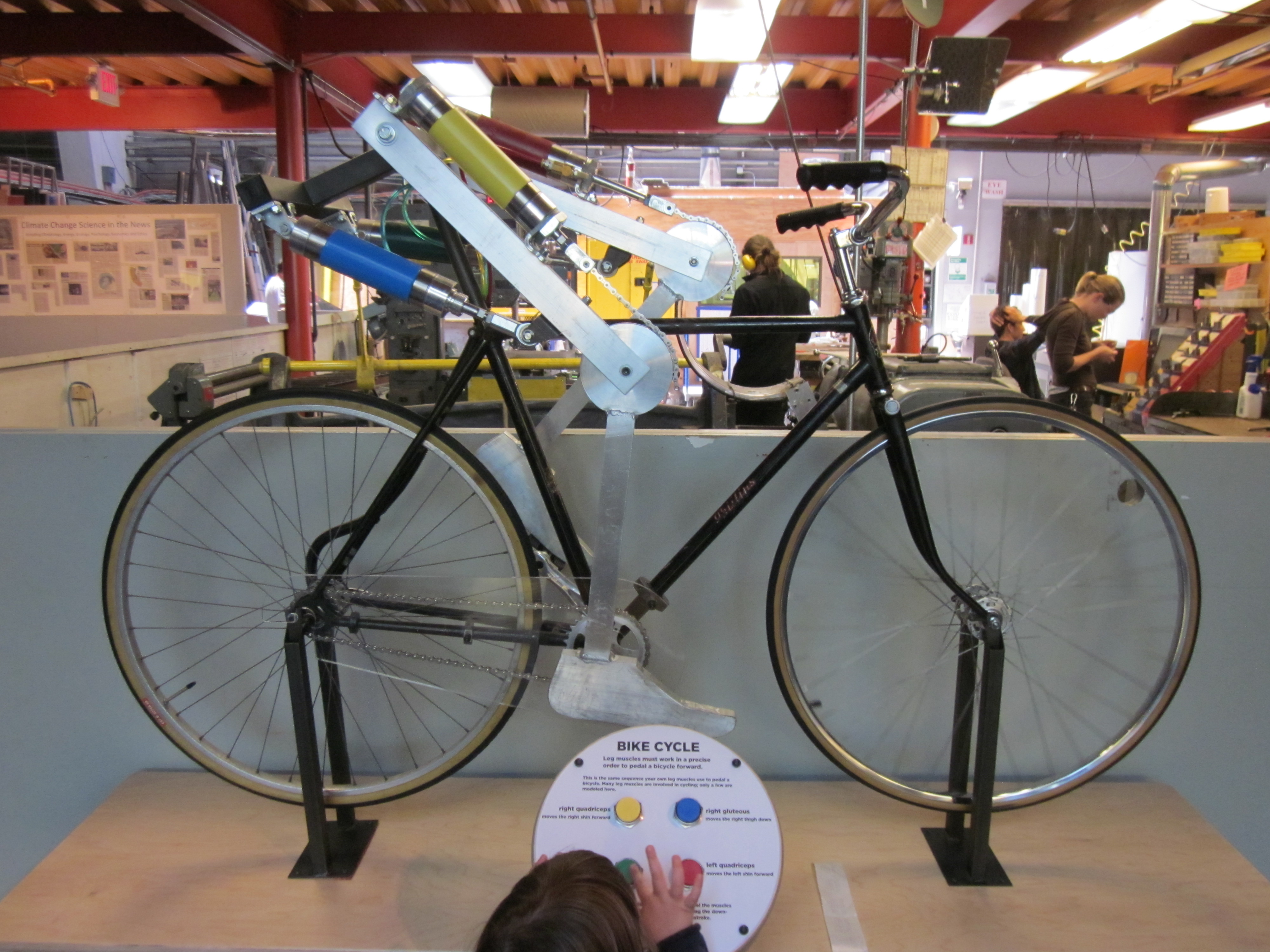
The Exploratorium offers a chance to make a robot ride a bike. Why not people?

Something I hear more often than I expected is other bike riders saying they’re not really advocates for cycling. They claim that their advocacy is just to be out riding. I totally support people riding bikes, but it surprises me that so many people don’t want to advocate for cycling. The reasons people for not advocating for something they love strike me as not much different that the reasons people give for driving instead of riding their bikes. It’s not that it’s particularly hard to do either, although of course it’s easier to do the same things that we’ve always done. Weekend leisure riders who drive a car to work every day are definitely making a contribution by making riding bicycles look normal, and everyday bike commuters who avoid advocacy are doing the same, but I’ve always felt that if it’s something I love–and I do love riding my bicycle–why would I stop there?

It would take too much time, I don’t have the right bike, there are no showers at my office, there are hills, I drive a Prius instead.

It would take too much time, I don’t know what to say, I don’t know what I’m doing, it’s too hard, I ride my bike a lot instead.

Car-free Presidio: more like this, please.

Are they reasons or are they excuses? I’m not sure I’m one to judge, but I’m trying to do more. I figure that if I have the time to write a tweet I have the time to request a bike rack using the city’s online request form (my link is San Francisc0-specific, but Google pops up similar links for dozens of cities). If I have the time to write an email, let alone a blog post, I have the time to write a letter to the mayor and the head of Muni supporting the proposed separated Fell-Oak bike lanes. If I have the money to buy a new bike bell (or a new bike, cough cough), I have enough money to join the San Francisco Bicycle Coalition and contribute to occasional fundraising drives. If I have the time to ask questions at the bike shop about my bike, I have the time to ask my credit union whether they could start making loans to get other people on bikes.

So I do all of these things, and occasionally things change for the better, and evidently this makes me an advocate. I am not in the league of A Simple Six, who is writing city bike plans and organizing community meetings and meeting with city officials one-on-one, or Family Ride and Tiny Helmets, who are starring in the local films and television news (and how cool is all of that?), but I once attended a hearing. Just like riding, I’m figuring it out as I go along. And although it’s not the same, I think that in its own way it’s just as rewarding as riding a bike.

Leave a comment

Filed under advocacy, commuting, family biking, San Francisco

Summer time and a new commute

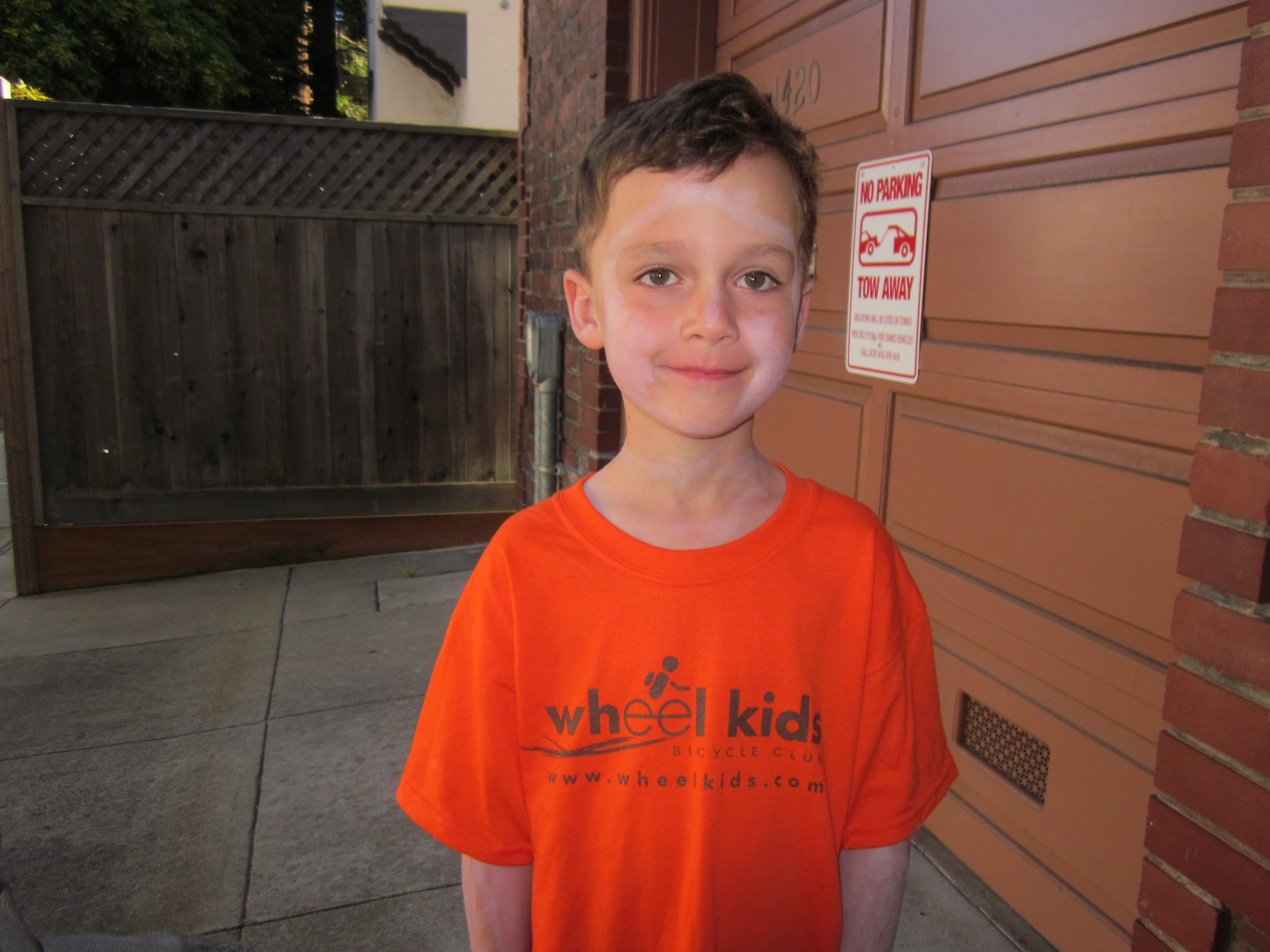
The day-glo orange t-shirt is issued to every wheelkids camper.

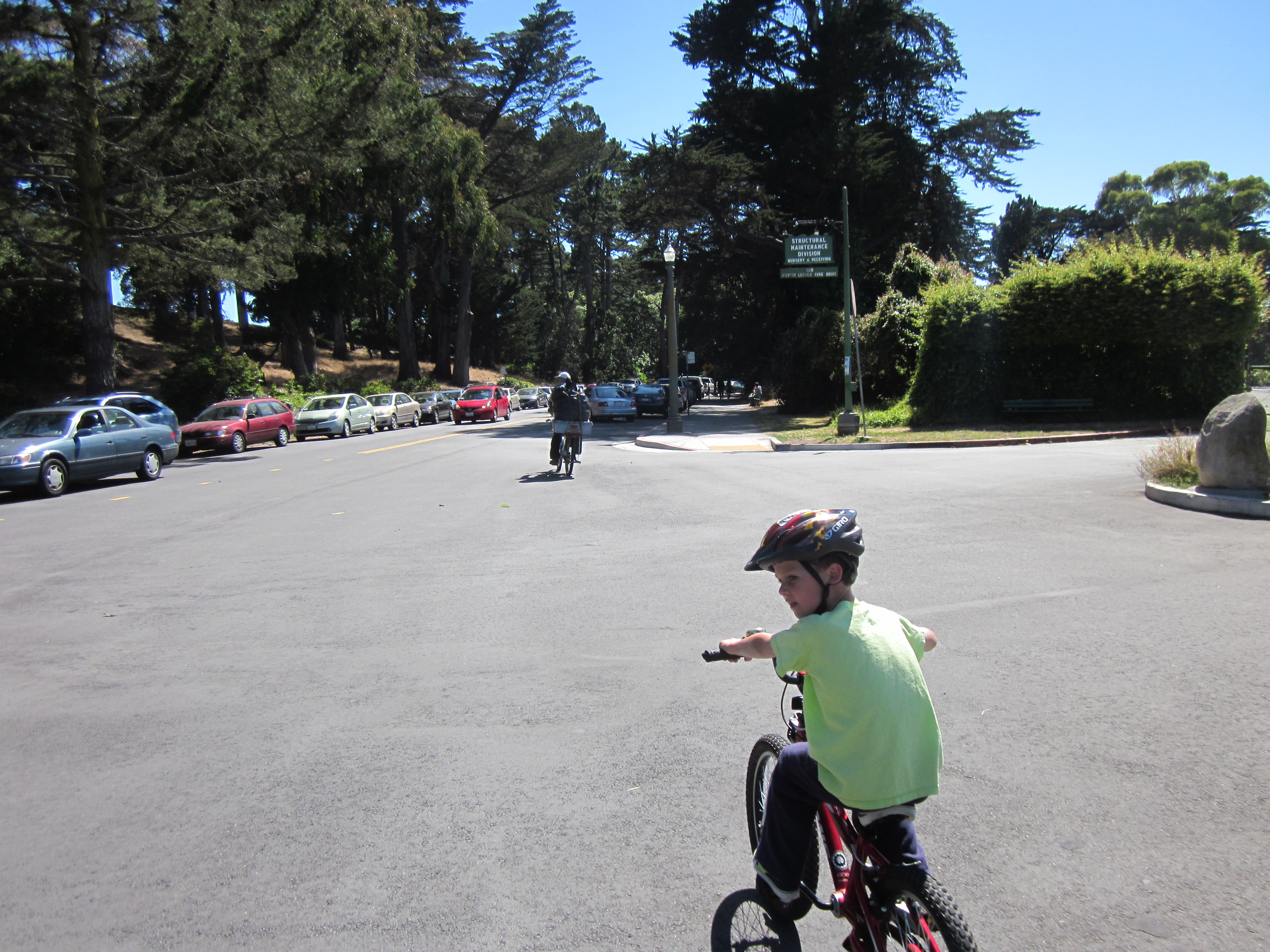
Now that school is out, our son will be spending most of June at wheelkids bike camp, learning to start, stop and with any luck, to scale some of San Francisco’s notorious topography. He had a slight edge over some other kids his age going into camp, having never used training wheels, so there were no bad habits to break. However I think I have mentioned before that his braking strategy to date has been to point the bike at one of us and yell, “Grab my bike! I need to stop!”

That’s fine at the park, but let’s draw the curtain of charity over what it was like at stop signs. The hills around our place were also an issue. Anyway, from the perspective of improved braking technique, especially on hills, so far so good. He is having a great time, and on the ride home from camp yesterday, pointed out hills he’d ridden up and down by himself, some of which were pretty respectable. Yesterday was his first ride on the Brompton IT Chair. He’s really too tall for it, but is now confident enough to climb aboard. Anyway it is very fun to have a conversation with a tall kid in an IT Chair, sort of like sitting in the corner of a coffee shop. A moving coffee shop.

One of the Presidio hills we face: Note the no bicycles sign. Go up if you can, but it’s too steep to ride down.

The only downside of wheelkids, from our perspective, was that it is in Fort Mason Center, on the northern edge of the city, nowhere near our usual commute routes. Not to mention there is that huge unavoidable hill in the Presidio between here and there. In addition, there was the issue of how to get our son’s bike to camp on the first day. I had hoped to attach it to the Brompton with the Trail-Gator we scored on craigslist, ride over with him, and drop off both kid and bike. But ultimately we were unable to get the bracket on. The Trail-Gator also wouldn’t fit over the MinUte‘s long rear deck. The Breezer seat post was blocked by rear child seats and their attachments. How could this be impossible? Late Sunday night we gave up. We drove our son to bike camp on Monday morning. Oh, the irony. It is a hellish commute by car in the morning, with unbearable traffic, and it consumed over 45 minutes. By comparison the bike ride takes about 35-40 minutes and goes through two nationally renowned parks. Driving was The Suck.

Heading out to wheelkids and the Financial District on the Kona MinUte. Note Matt is wearing dress pants for this commute; he is so hardcore that he does this route perspiration-free.

Evidently it is standard practice to drive kids to bike camp, however. Our son was picked up by his sitter and they rode the bus home on Monday, so we didn’t realize until Tuesday morning that as is SOP, the camp had kept his helmet along with his bike. After trying on other family members’ helmets for him, none of which fit, Matt had to drive him to camp again. Maybe those anti-helmet advocates have a point.

So Wednesday was the first day that any of us rode to bike camp. Matt took him on the MinUte because the trip from there to his office is relatively flat, and the camp is vaguely en route, comparatively speaking. As usual, although it sometimes takes longer than we anticipated to get everything working, the bike commute ended up being better than I’d dared to hope.

It’s hard to get a good shot of the Kona MinUte on the move.

Matt’s update: “BTW, the ride this morning was great — though one look at the Arguello hill and I wimped out.  I took Clay up to Presidio, which is a much milder slope up over Presidio Heights.  The trip from Ft. Mason to the office was a breeze.  Whole thing was ~1 hour, not including the 10 min stop at wheelkids.  Scenery is pretty unbeatable the whole way — water and bridge views everywhere along the Marina and Embarcadero.”

Back in the game!

Leave a comment

Filed under commuting, family biking, San Francisco, traffic