

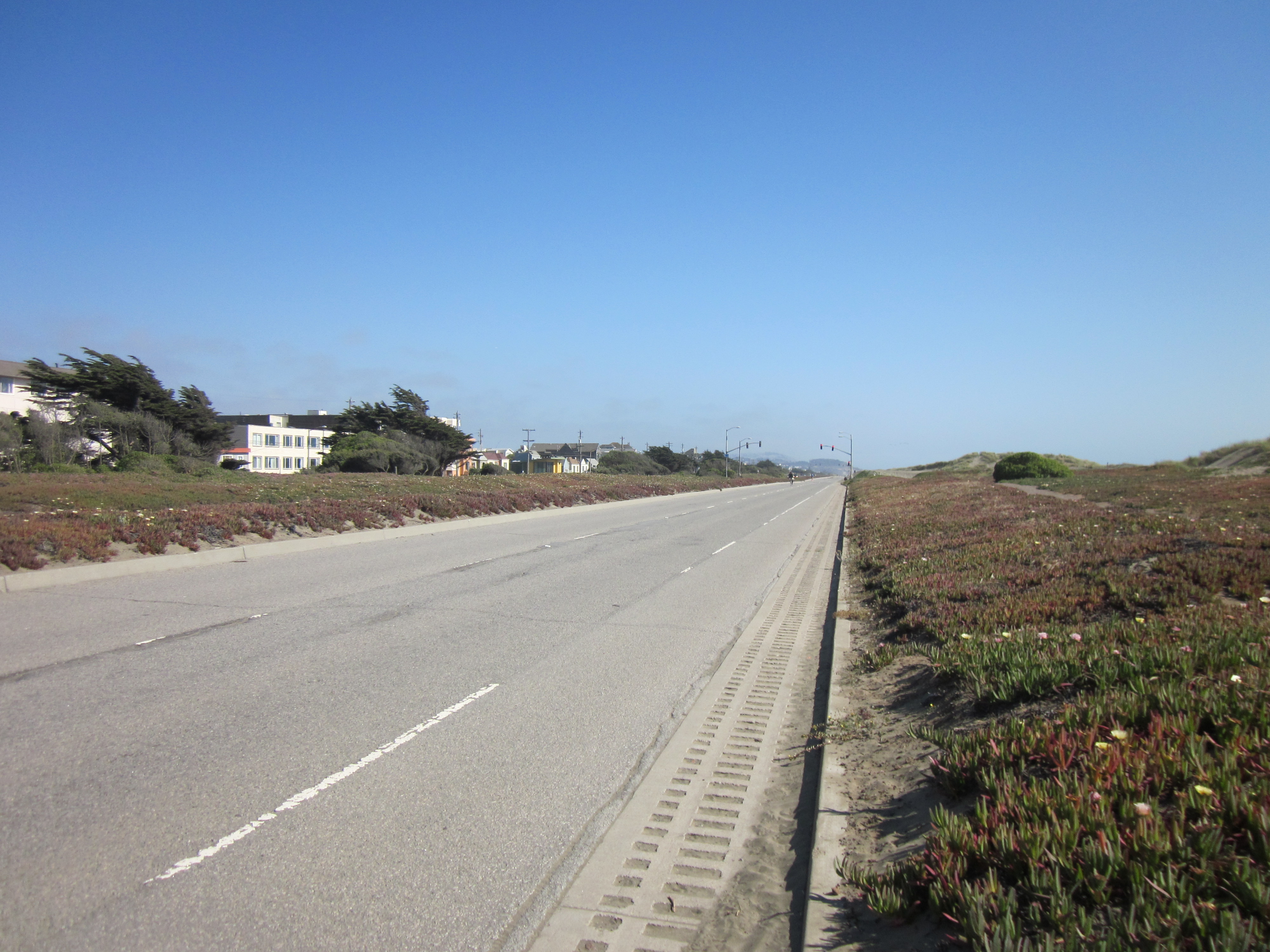
This is a street designed for traffic.
I recently started reading paper books again, the kind found at the neighborhood library, rather than scanning the digital library and downloading books without having to leave the relative comfort of home. The paper library is still substantially more diverse than the digital library, with a much broader selection of non-fiction in particular, although admittedly it appears to offer less in the realm of evangelical romance novels (which are surprisingly difficult to identify based solely on title and cover art; this is why now I only download books that have gotten a good review somewhere, sometime).

Even though we rarely drive, it still really ticks me off that drivers park their cars right in our driveway, like, daily. Drivers who are really committed can even block the bikes.
While in this less ephemeral realm I picked up a copy of Tom Vanderbilt’s Traffic, which is one of the most fascinating books I’ve read in quite a while. For a long time I have accepted that getting on an airplane is the psychological equivalent of locking myself into a small prison cell, and I have prepared myself for flights accordingly. I drive more frequently than I fly (every week or so rather than every few months) but I hadn’t really thought before about how putting myself in a car is somewhat equivalent. I also only recently learned that cyclists call drivers “cagers,” which has a certain dark accuracy.

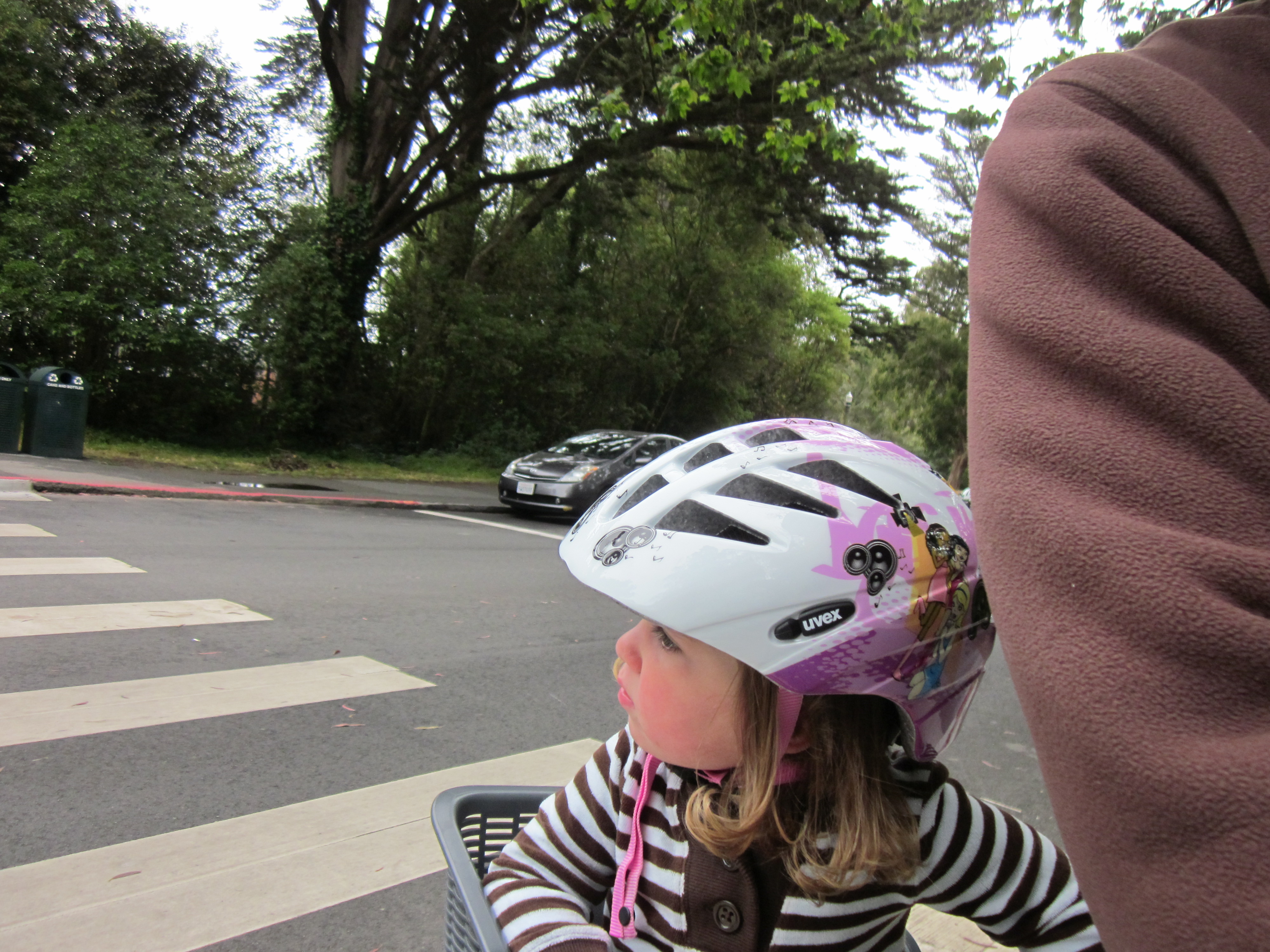
Riding a bike means never being stuck in traffic.
Vanderbilt discusses the many illusions of driving, including the expectation that early merging is more efficient than late merging, and the efforts of traffic engineers to reprogram people who resent late mergers and create traffic jams to force them out of merged lanes (I used to be one of these people). Even more fascinating was the illusion of queuing in traffic, where whichever lane you pick appears to be moving more slowly than all of the others. Ultimately, it turns out that they’re all moving at the same speed, but because everyone ends up waiting far longer than they end up passing—that’s what makes it heavy traffic—no one perceives the underlying equity.
This made me realize that one of the pleasures of cycling is never having to queue except at stop lights. Speaking as someone who cycled in Copenhagen, where bicycle traffic is thick, I can testify that this benefit is not an artifact of only having few riders on the road. Part of this is undoubtedly another counter-intuitive discovery by those who study traffic: slower speeds lead to faster movement; below certain speeds, there are no traffic jams. The rest is just inherent.

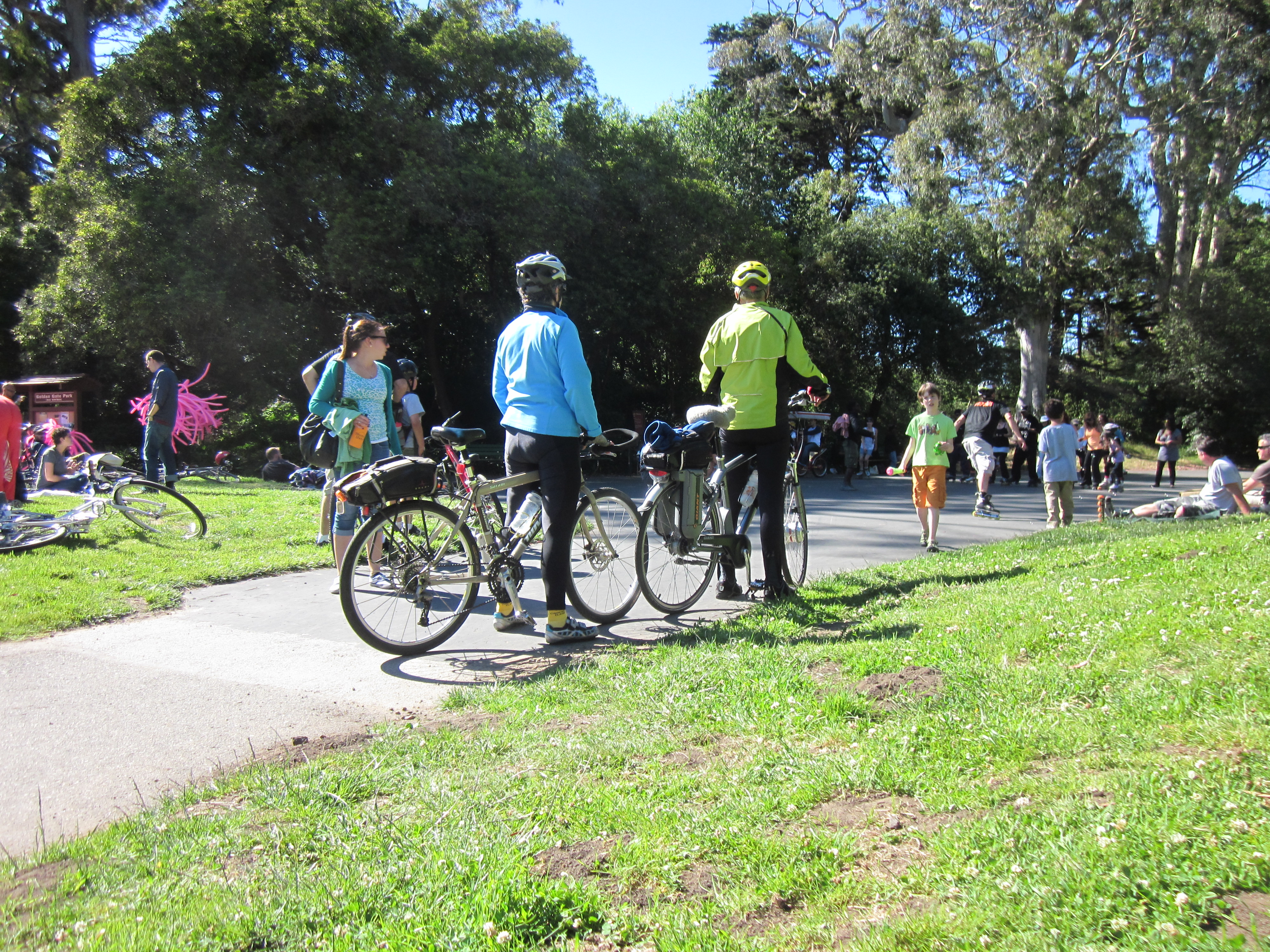
This is a street designed for people. Drivers complain that parklets are “too close to the road.”
It was particularly terrifying to read about just how awful most drivers are, which is something you can often ignore in the car because you’re busy being an awful driver yourself: trying to settle down kids, program acceptable music, talk to passengers, talk on the phone, or worse yet text. But I definitely notice it as a cyclist and pedestrian. Given that there is no feedback that all the dangerous things drivers do are dangerous until they actually hit something, why wouldn’t most drivers believe they’re doing a good job? Even when they do hit something, the fact that it doesn’t happen every day makes people believe the non-collision days are more meaningful. And my friends who work at power companies tell me that even people who hit utility poles argue that the pole was at fault (“It was too close to the curb!” or if seriously drunk, “The pole was in the road.”)
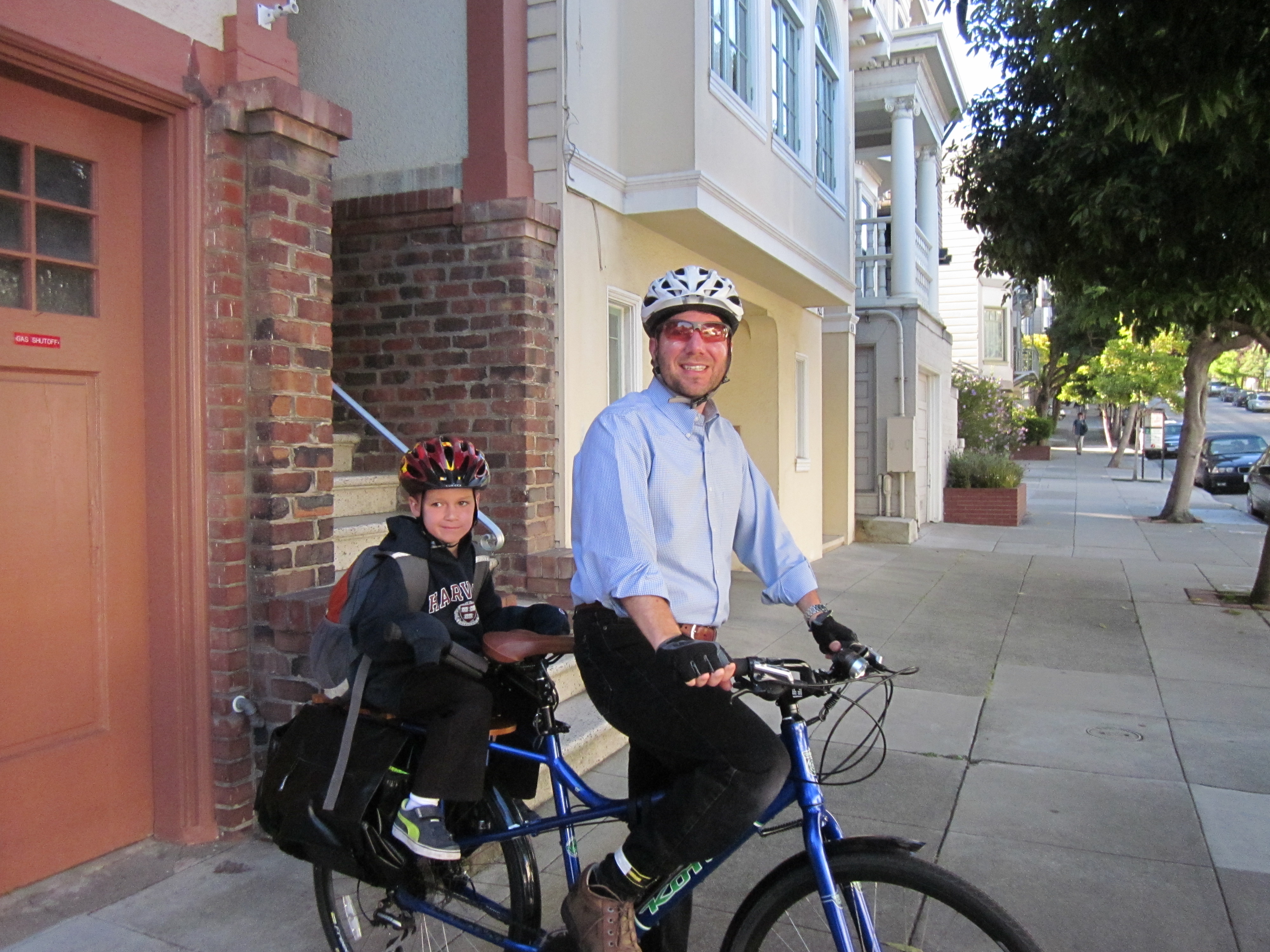
My husband is not a MAMIL
It was painfully familiar to read Vanderbilt’s discussion of how women end up creating and suffering in the worst traffic because of what is referred to as “serve passenger” driving. Taking the kids to school, picking up dry cleaning, doing the grocery shopping: these trips involve the most traffic—school pickup and dropoff zones are particularly notorious—because everyone needs to do them at the same time, and they are the least compatible with ride-sharing. And that’s before even mentioning parking. This is why there are dark jokes about the kinds of hardcore cyclists (Middle-Aged Men In Lycra, or MAMILs) who are able to commute the way they enjoy because their wives are doing all of the errands by car.

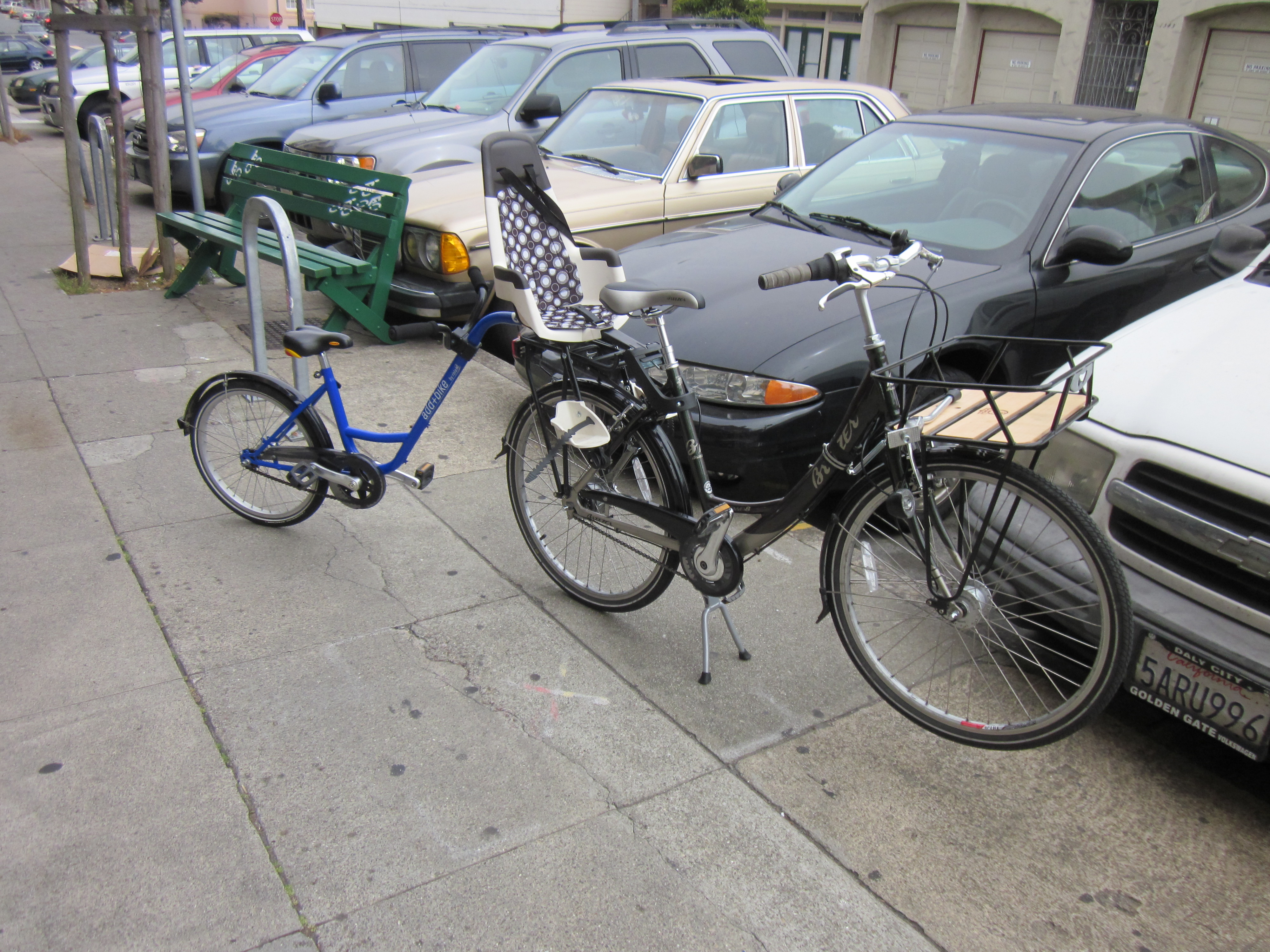
Doing errands by bike means never having to look for parking.
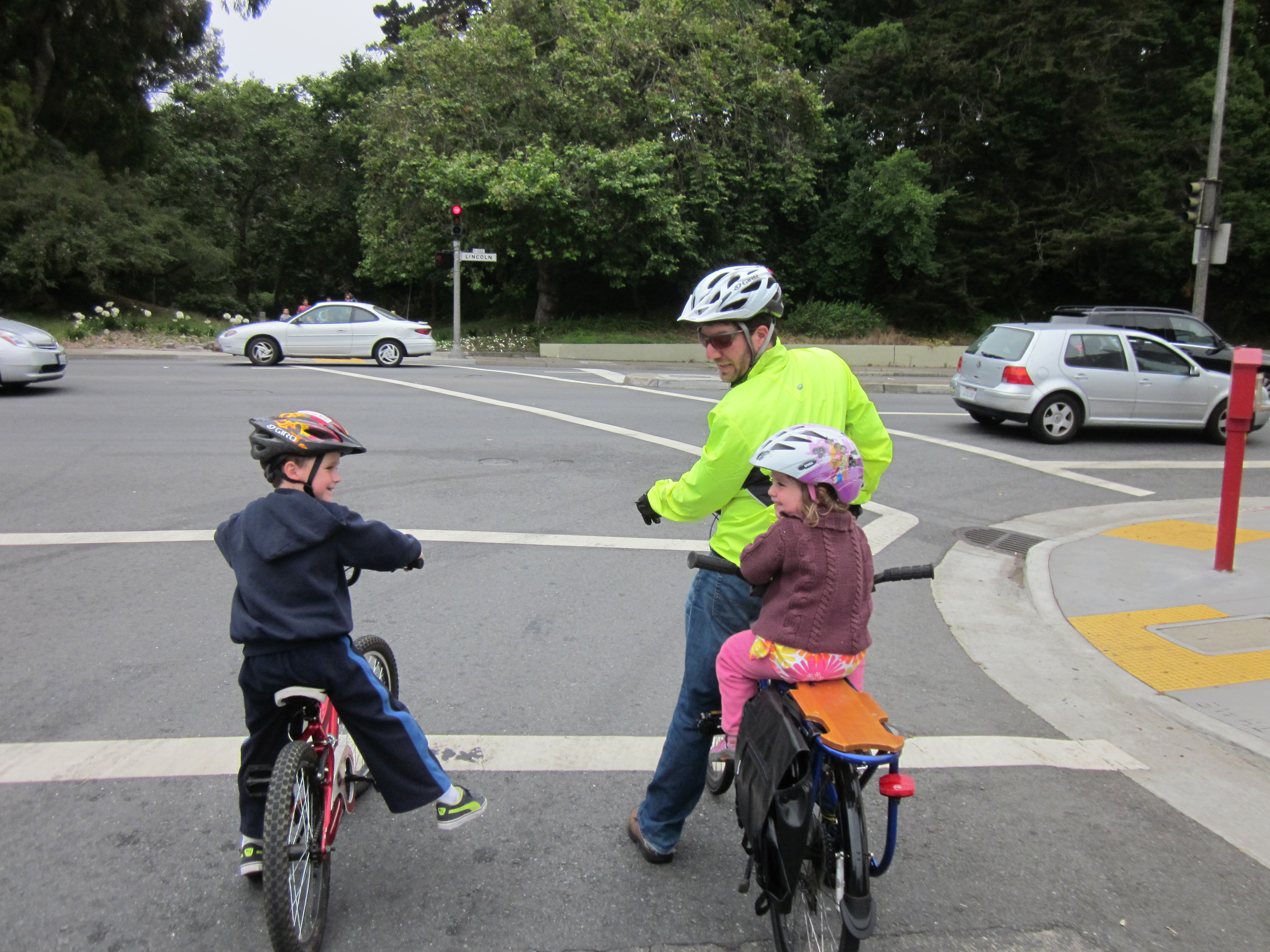
Although my husband handles his own dry cleaning and many other household tasks, he does far more business travel than I do, and when he’s away I do almost everything alone. This is part of the reason we’re in the market for a new family bike, and it’s part of the reason I get so annoyed that the market for bikes like these is so thin. I think there are more models of Trek Madone alone than there are family bikes of any brand. (I only recently learned that the Madone is a model of racing bike made by Trek that costs like $5k, and there are apparently a million versions, all of which sell like Big Gulps.)
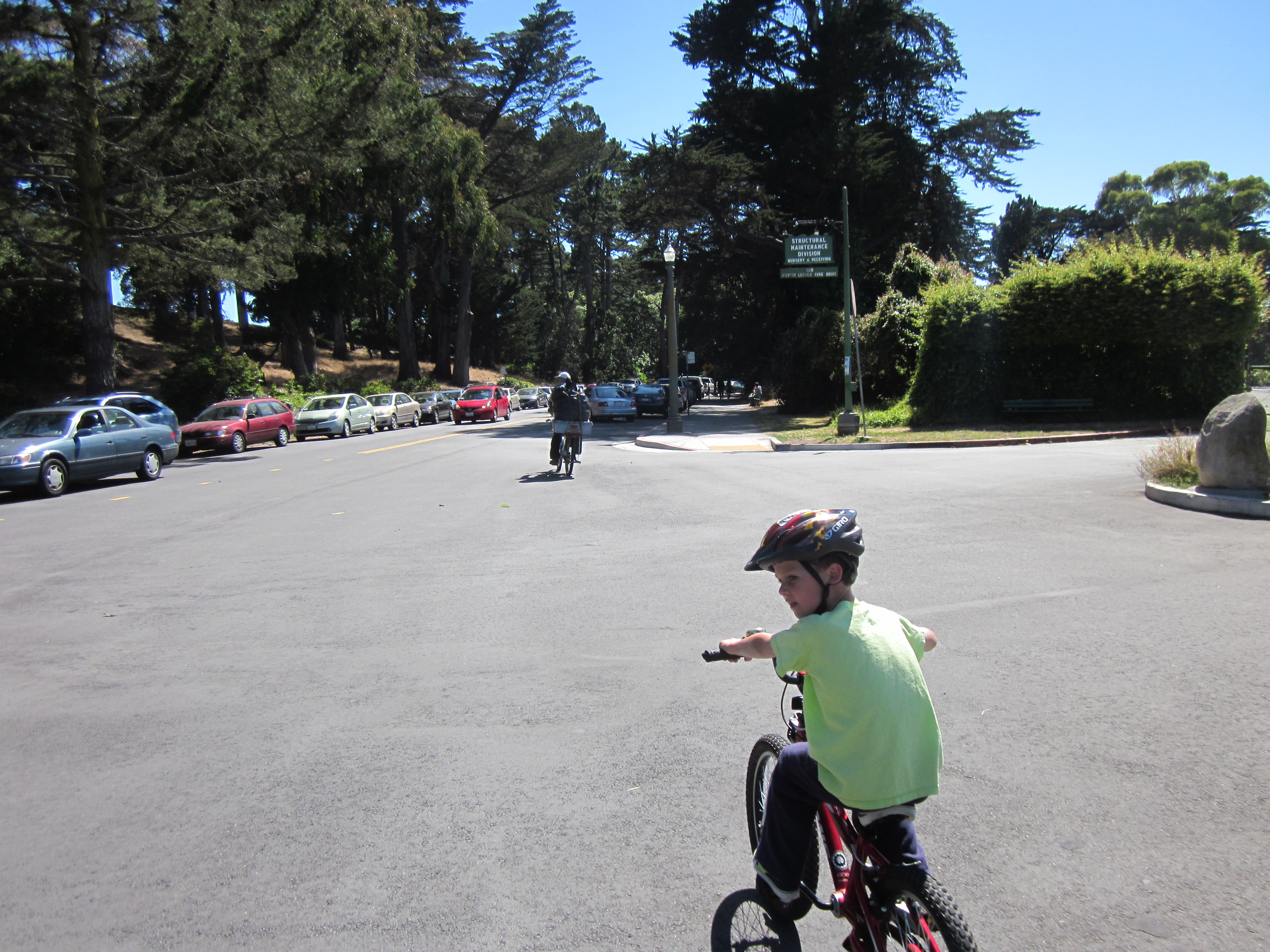
My son will grow up riding his bicycle for transportation just like I did.
In my personal experience, when I transitioned to commuting primarily by bike I actually saved time, not to mention frustration, because I avoided so much traffic en route. In addition, as a working parent there is almost no other time to exercise. But it’s not possible to do these kinds of errands—picking up two kids at two different schools, etc., with a mountain bike or even a so-called commuter bike. You need something that can haul non-traditional cargo, like cartons of milk, kids themselves, and whatever fragile and emotionally significant popsicle-stick-and-cotton-ball art projects that they want to bring home unscathed.
At the end of this book, I understood why Vanderbilt apparently transitioned to riding a bicycle and public transit. I would have done the same thing if I hadn’t already. Public transit is unequivocally safer and the majority of research suggests cycling is as well (although people find this difficult to believe, or at least “not where I live!”–urban people insist they’d ride if they lived in the country where there’s less traffic, rural people insist they’d ride if they lived in the city where there are bike lanes, etc.) And either option is dramatically less grueling than driving.
When I was first hired at my university I went to a talk for junior faculty by a senior professor (who later won a Nobel Prize) about how to balance work and family. Although many of the things she did were not possible for me (e.g. having her first child at age 45—too late already!) her strongest advice was, “Kill your commute.” Do whatever it took to move close enough to work and school that almost all your time was spent doing something you valued (research, patient care, spending time with kids) rather than something you didn’t (driving, or more likely, sitting in traffic). And we took that advice. We moved from a large house in the suburbs to a small apartment in San Francisco that cost over 50% more per month, and my husband, after a long stint of unemployment and underemployment, found a new job within city limits. We slogged through the San Francisco public school lottery. (And we did all this before we had bikes. Between the hills of San Francisco and the absence of family bikes nationwide, cycling wasn’t an ambition for us at the time.) It was a long road, but our lives are infinitely better for it.

Streets can change. People can change.
Most people wouldn’t have to move and sell a car and change their jobs and their kids’ (pre)schools to change their commutes, as we did. And some of the best changes, which involve transforming streets themselves, are not individual decisions but collective decisions: removing parking, adding bike lanes, creating parklets, developing bike share programs, lowering speed limits, and narrowing roads. But having seen the result of changes like these, in our own lives in San Francisco and after visiting cities like Copenhagen and even Paris that have implemented them, those changes are most assuredly worth it. They scale cities back down to human size. Calming streets is really calming people. It takes the stress out of living.



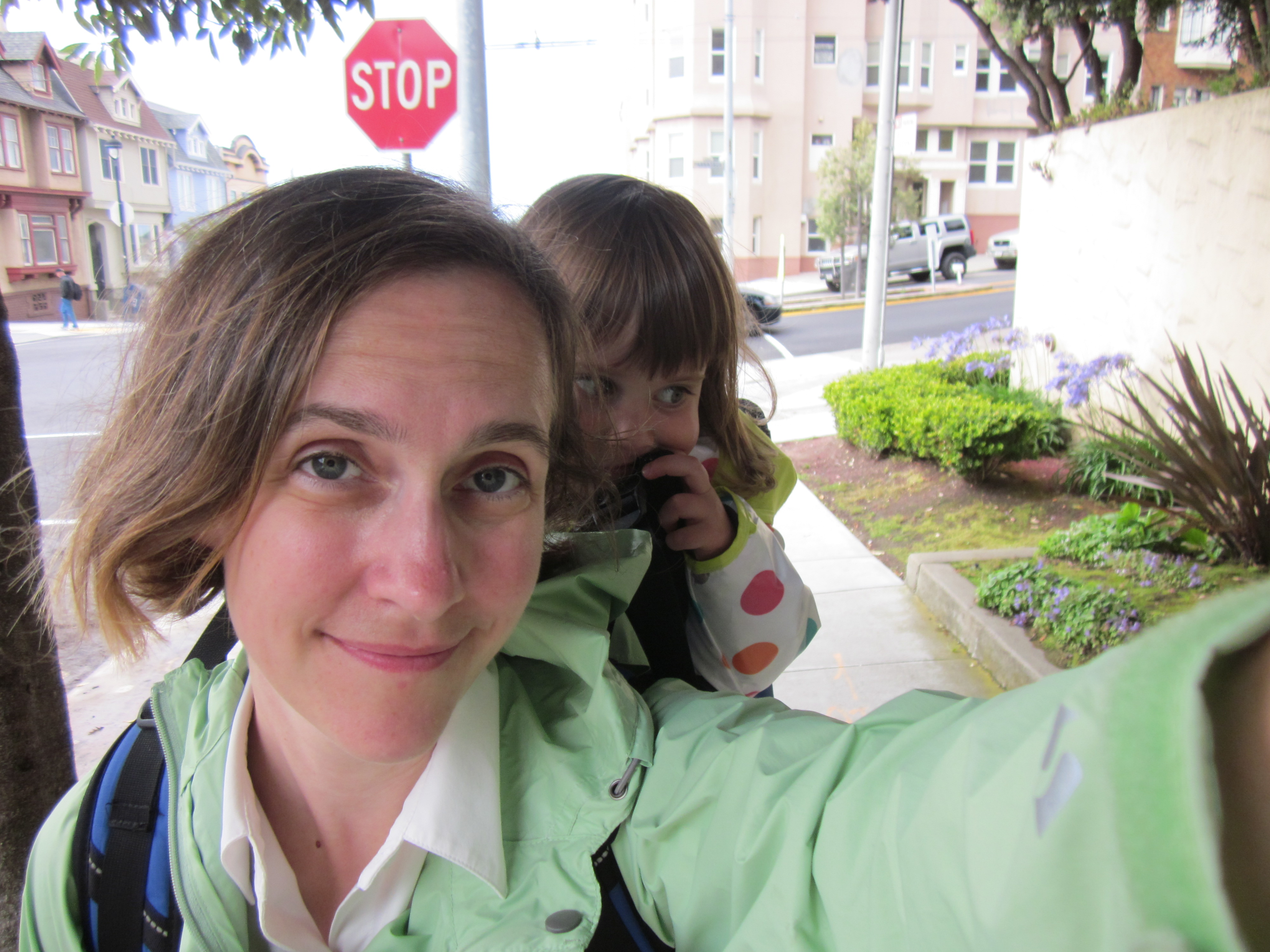











 Hum of the city