Tag Archives: San Francisco

Christmas tree by bike, again

Another December means another trip to get a Christmas tree by bike. So far we have failed to match the experience of carrying a tree by bike that we had in the first year, which was laughably easy. Last year the tree fit in the bike just fine, but Matt dropped the Bullitt and lost one of the support struts holding up the rain canopy, which left the kids miserably cold until we got the new part. That meant the post-tree hauling experience was less than fun.

Christmas tree on bike, yet again

Christmas tree on bike, yet again

So this year we switched back to the MinUte because I was paranoid about losing a support strut again, even assuming that we removed the canopy in the garage. It turns out that a midtail is great for a smaller tree, but a 7-foot tree with attached stand is a bit beyond the scope of our bike. Matt rode for part of the trip and walked the bike for part of it. The tree was firmly attached with bungees, but so back-heavy that the bike wanted to do wheelies. Maybe it would work if we were heavier riders. Next year, it’s back to the Bullitt (with an extremely careful removal of the canopy and full parts inventory before departure).

Moving up: two kids on a Brompton, now aged 8 and 4

Moving up: two kids on a Brompton, now aged 8 and 4

However we did resurrect last year’s tradition of me riding the kids home on the Brompton. This was a bigger challenge than last year given that I’m not as strong as I used to be. For the last hill my son jumped off and walked with the tree-bike, so I was only carrying my daughter. Ultimately I made it up a decent hill on an unassisted bike with my daughter, who is now pushing 45 pounds, in the front seat. Not bad.

Although I tend to think bringing a tree home by bike is nothing special when I see all the cargo biking families who’ve posted pictures of themselves doing the same thing, it is evidently still pretty avant-garde here in San Francisco, because the lot manager recognized us from previous years. He did report that some families bring their tree home on scooters. And although our hauling strategy has not yet been perfected, it still beats waiting for one of the hotly contested spots in the parking lot and vacuuming a gazillion pine needles out of the car, an experience which historically made us reluctant to buy a tree at all. It is a big deal that we’ve now had some kind of tree three years in a row, as we’re (a) technically a Jewish family and (b) pretty lazy about the whole getting-stuff aspect of the holidays (my kids typically score socks for Christmas). In my defense, though, I always take the two weeks of school holidays off and spend gobs of time with the kids.
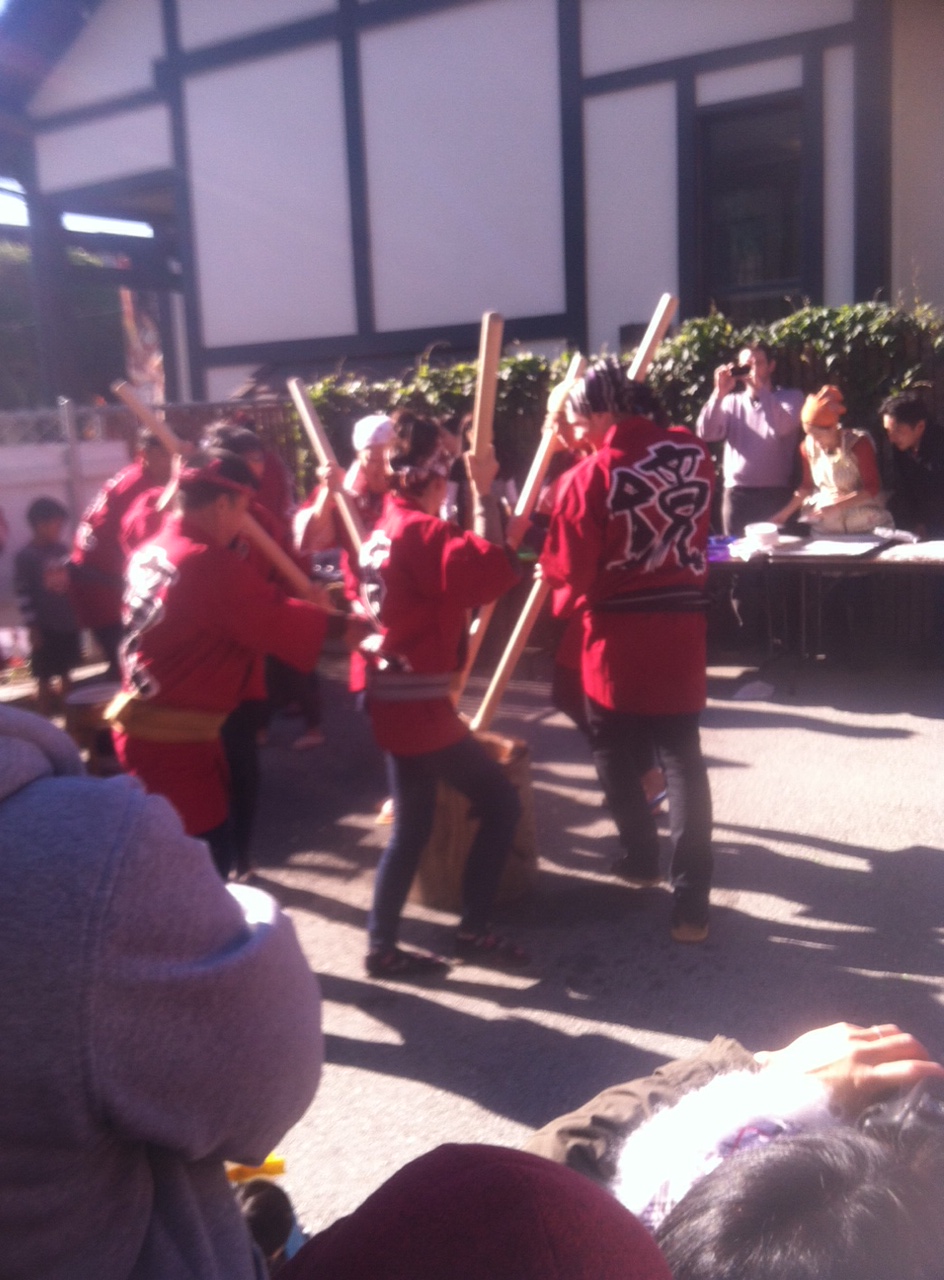
We need happi coats if we're going to join the mochi pounding crew.

We need happi coats if we’re going to join the mochi pounding crew.

On Sunday we went to our daughter’s preschool for a winter concert and mochitsuki, which was a bit early for a mochitsuki but pretty incredible nonetheless. Watching a pile of sushi rice turn into a gelatinous mass of delicious mochi is one of those have-to-see-it-to-believe-it experiences, plus we got to eat the mochi. My only complaint about the experience is that the bike parking around Japantown is pretty substandard. But evidently the car parking situation was worse, as a bunch of families arrived late.

P.S. A zero-waste Christmas extra: my gift wrapping strategy. We are pretty mellow about the present-aspect of Christmas, but there are some gifts under the tree. One year my son even got a bike (the bike was left unwrapped).  But most gifts are wrapped in fabric. Thanks to our exposure to Japanese culture, I picked up a few furoshiki in Japantown years ago to wrap gifts, and I reuse them every year. (For furoshiki wrapping techniques, ask the internet, which is almost as eager to teach people how to use furoshiki as it is to teach people how to wear scarves.) When I run out of furoshiki—I didn’t buy a lot because they are kind of pricey for something I use few times a year—I wrap gifts in my scarves or in our flour sack dish towels, which are free because we already own them. I know, know, dish towels: classy! But they are big and square and hey, white is a Christmas color. For larger gifts, I’ll use a pillowcase. And for huge presents, well, we have sheets and a fabric shower curtain. A watercolor pencil will write on fabric and come out in the wash, allowing the lazy wrapper to skip not only wrapping paper, tape, and ribbon, but a gift tag as well. Some people make their own furoshiki, or pick up square scarves while thrifting, but ever since I had the dish-towel insight I just can’t bring myself to make the effort.
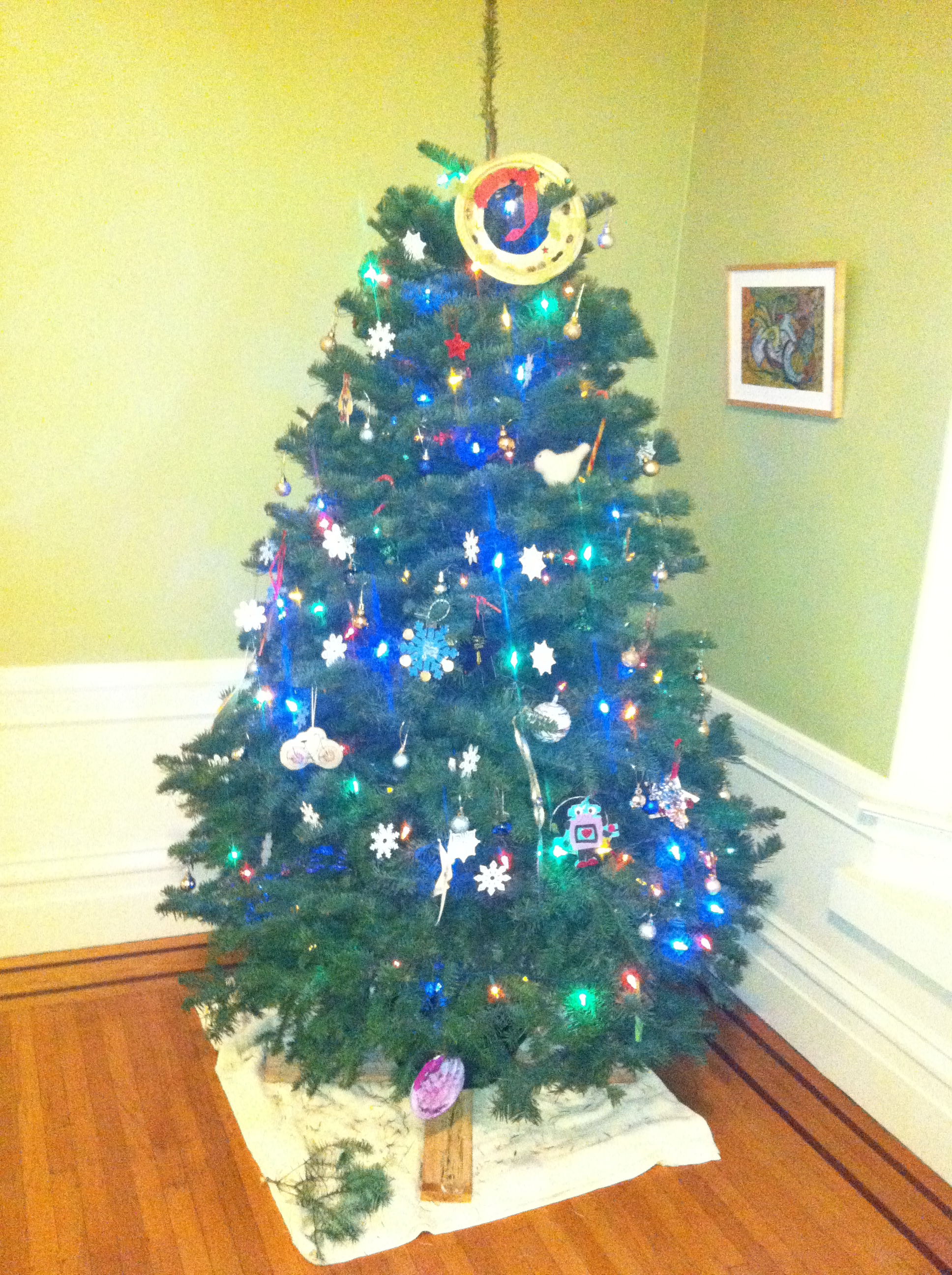
The tree at home and decorated

The tree at home and decorated

Presents for other people typically go out in a glass jar that would otherwise have been recycled, a flour sack dish towel that I wouldn’t be traumatized to never see again (they’re cheap), or some of my kids’ artwork (always my first choice, but not always available in appropriate sizes).

Happy holidays!
2 Comments

Filed under Brompton, Bullitt, Kona, San Francisco, zero waste

84th Annual Holiday Tree Lighting in Golden Gate Park

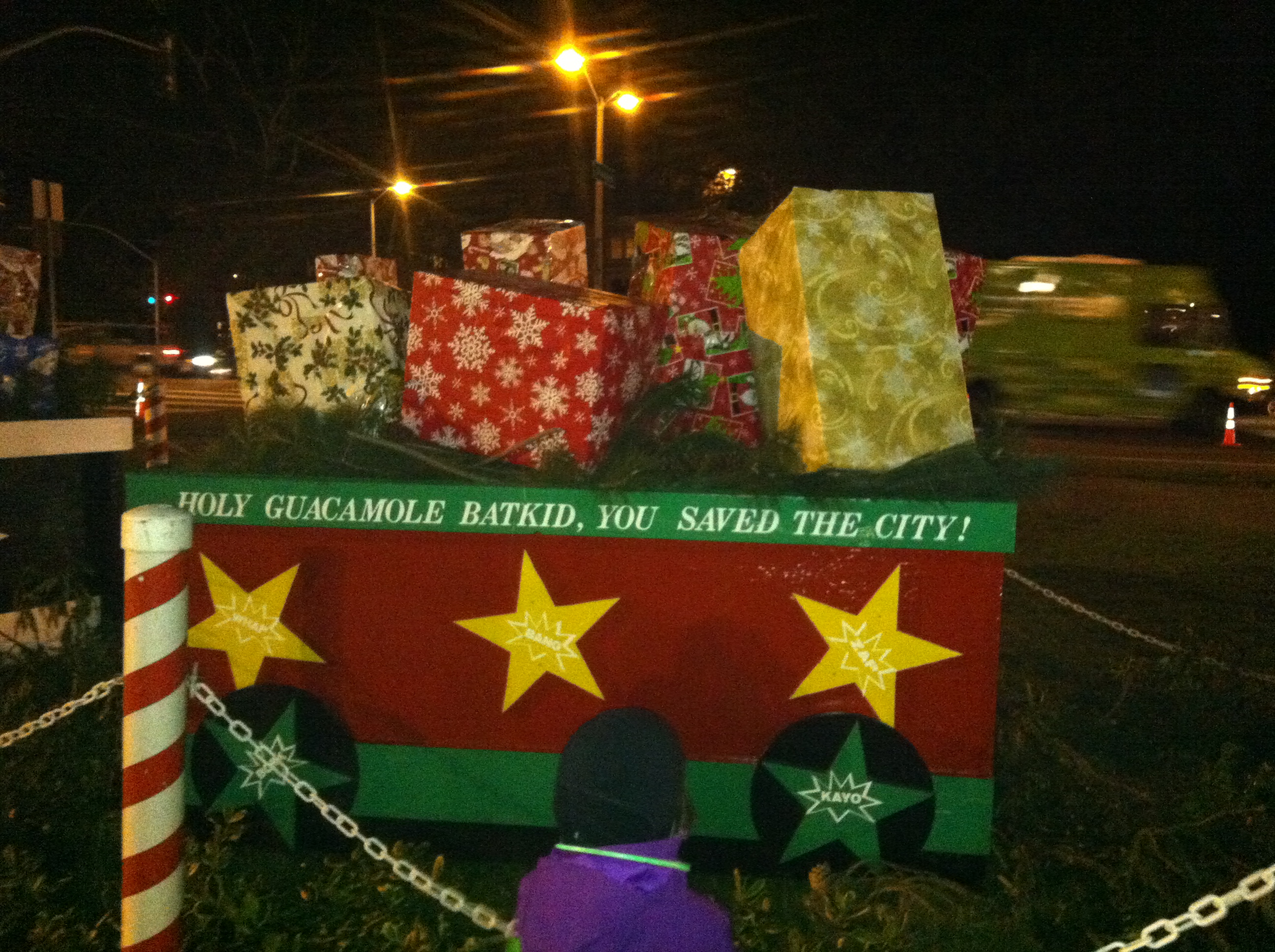
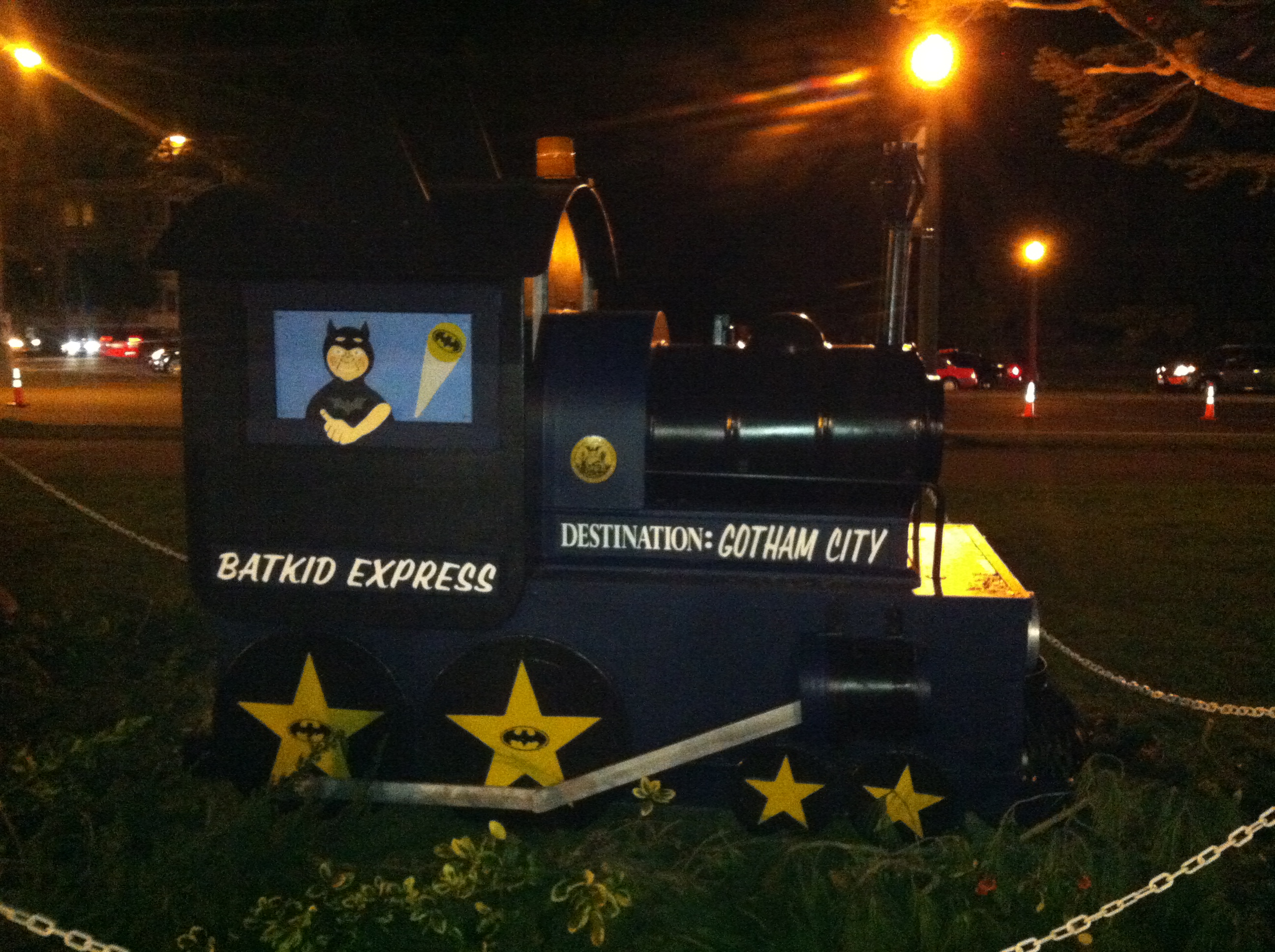
Batkid Express

Batkid Express

The tree lighting at Golden Gate Park has been going on for a long time, and the associated party just keeps getting bigger too. We haven’t been 84 years in a row, pretty obviously, but this tree is near home so we’ve been stopping by for a few years. Every year there’s a train of presents next to the tree that reflects some theme of the year. Last year’s theme was of course outcasts and misfits based—Go Giants! This year, the train was a shout-out to Batkid, which was one of those things that reminded me why we just spent an absolute fortune to buy a flat in San Francisco that we can’t even live in yet.

Check out the cool seats on this Xtracycle: they glitter. (Apologies for the spawn photobomb.)

Check out the cool seats on this Xtracycle: they glitter. (Apologies for the spawn photobomb.)

Given that the tree lighting happens during rush hour on a Thursday night at a major auto intersection, though, and that the usual auto parking is eliminated for the event itself, I can’t imagine ever going there by car. We ride our bikes and we’re definitely not the only ones. It was a family bike extravaganza. I don’t bother to take pictures of the “normal” family bikes I see anymore—there were Xtracycles and Big Dummies and BionXed Yuba Mundos and Kona Minutes and bikes with trailer-bikes and an endless sea of commuter bikes with rear child seats—but I still love seeing them all.

The elusive Urban Arrow, now in San Francisco!

The elusive Urban Arrow, now in San Francisco!

Our box bike is usually the only box bike wherever we happen to be going, but yesterday evening in Golden Gate Park it was in pretty classy company. Of course we spotted the stoked Metrofiets, because that family is apparently destined to attend all family biking-friendly events that we attend. But we also spotted something I never thought I would see in person: a real live Urban Arrow! The most obscure family bike of all obscure family bikes!

My impressions of the Urban Arrow are based solely on lurking around the bike rack where it was parked and taking pictures, because unfortunately the family riding it did not appear while I was there. I hung around creepily for quite a while, passing through mildly embarrassed to seriously embarrassed and annoying my daughter by asking her to stay near the bike but not letting her climb in the box. But eventually it was time to go eat dinner so I still don’t know who’s riding it or what they think of it.

Holy Guacamole!

Holy Guacamole!

The Urban Arrow is a good-looking bike, with a very classy box design. The mid-drive assist is totally integrated and enclosed and it looks bombproof. My first thought when looking at it, though, was “wow, that’s a big bike.” Like the Bakfiets long or the Metrofiets, it was clearly designed as a 3-kid hauler. Our Bullitt carrier is designed to hold one kid, allows our two kids to squeeze in with no problem, and can handle 3 or 4, but I seriously doubt that that many kids would be comfortable on a long ride. (There is a bigger box for the Bullitt that’s designed to hold more kids comfortably, but that’s not what we got.)  Personally I’ve found that I like having the kids in a narrower box because it makes us more nimble getting around crowded city streets. I suspect after seeing the Urban Arrow that we would have gotten the Bullitt for that reason alone, although I haven’t actually ridden the Arrow, and that mid-drive assist might have changed my mind if I did. And of course I’m tall enough to ride a Bullitt; if I were 5’1”, I might have tried to track the Urban Arrow down even if I had had to import one myself.

The last time snow fell from the sky in San Francisco was 1976, so just like East Coast ski resorts, they're making snow at SF Parks and Rec.

The last time snow fell from the sky in San Francisco was 1976, so just like East Coast ski resorts, they’re making snow at SF Parks and Rec.

Our son was at his parkour class and missed the festivities, but our daughter got to build a snowman, go on lots of rides, dance to Christmas music, climb all over a fire truck, and make ornaments. (The cookie decorating line was unspeakably long, so we negotiated to have a cookie decorating extravaganza at home instead.) Like many SF Parks and Recs events for kids, this was a free event, and one more reason to raise kids in the city. Few families stick it out and learn all the things that city living has to offer kids, like the nearly 20 field trips my son took in kindergarten alone—they went to the opera and the symphony and the zoo and the Academy of Sciences and the Heart of the City farmers market (with live chickens) and on and on—but we few, we happy few! Anyway, she had such a great time that she barely noticed the cold until it was time to go home, which fortunately wasn’t far away.

The only trouble was finding decent bike parking, because the racks filled up fast. Next time how about bike valet parking, Parks and Rec? There’s definitely enough demand.

1 Comment

Filed under Bullitt, family biking, San Francisco

Winter riding, San Francisco style

My winter bicycling cred is nonexistent. There are families I know who ride in snow and ice and purchase things like studded tires. I live in California for a reason—I would rather tackle the mega-hills of San Francisco than deal with being cold or hot. When I got accepted to Berkeley for my PhD I was living in Boston, and I used to read the weather reports for San Francisco every morning, longingly. I’ve never looked back.

So when I learned that temperatures this week would be below freezing and that we might get snow, I was horrified. San Francisco, you hussy!

But I was not completely unprepared. Last year temperatures in the city dropped below freezing as well. (Thanks a lot, anthropogenic climate change.) As an adherent of the “no bad weather, only bad gear” school when it comes to rain, I decided to try the same approach for cold.

Two kids in the standard Bullitt box, still

Short sleeves under the canopy no matter what the weather

Most of the time when it’s cold the kids go into the Bullitt, because although I generally consider my children intelligent, when it comes to dressing for the weather they are complete idiots. “I don’t need my jacket! I’m too cold! Wah!” Repeat ad infinitum. The canopy on the Bullitt is advertised as a rain canopy, but it also blocks wind and warms up like a greenhouse with a kid or two inside. They wear jackets in there but only because it’s cold in the garage before they get in, and we give them a blanket, but mostly they use it to play peekaboo. Once I shoved my daughter under there in her pajamas with a blanket over her to get my son to school when Matt was away, and she slept the whole trip. I don’t think she even realized she was not in a bed (we get earthquakes here, the bouncing was a non-issue).

A trailer would work the same way, of course.

She's smiling under there but who can tell? Under the blanket: Muddy Buddy and rain boots.

She’s smiling under there but who can tell? Under the blanket: Muddy Buddy and rain boots.

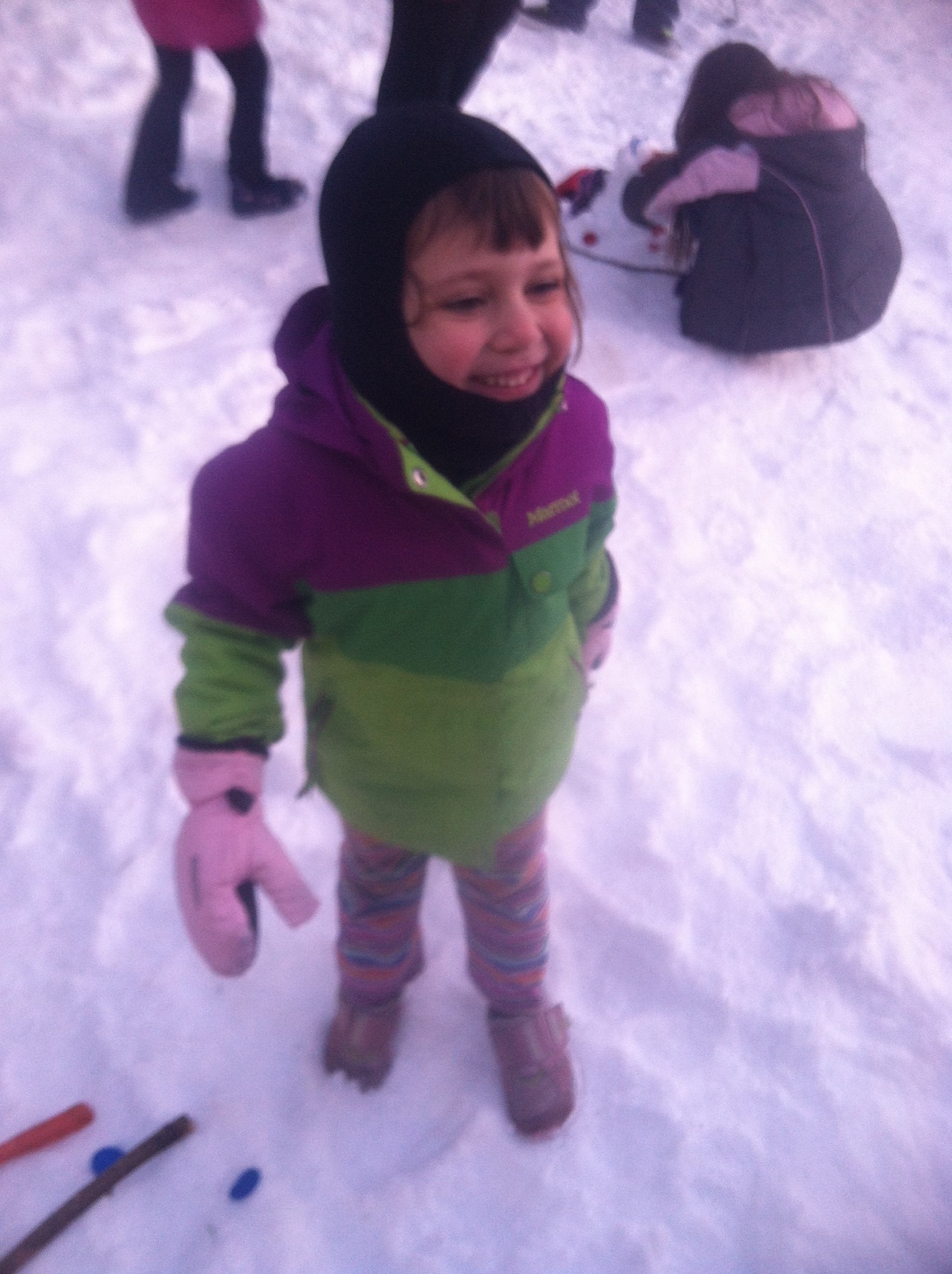
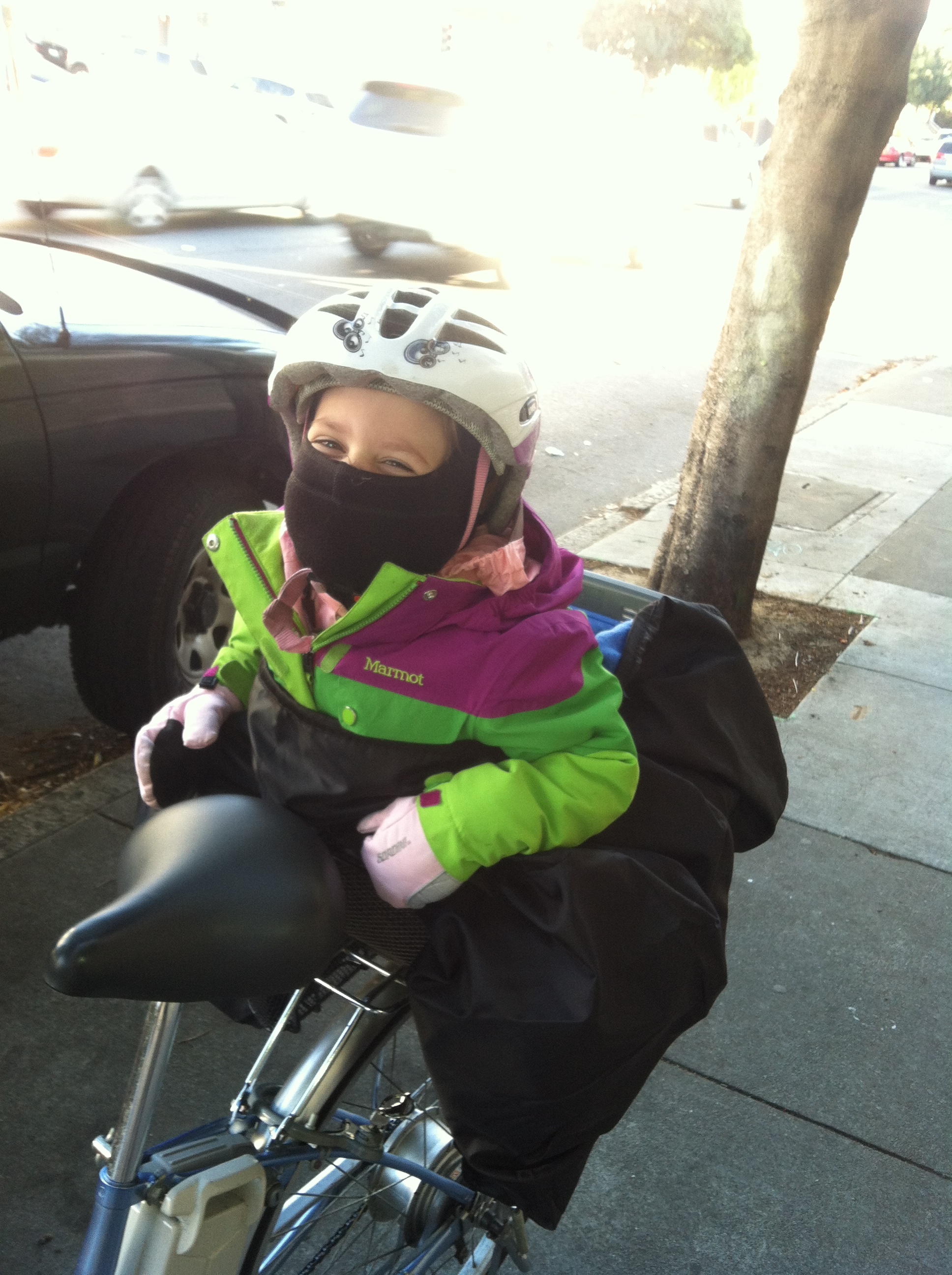
However we do occasionally have to get the kids around in a child seat. This morning, alas, was one of those times. I took my daughter to preschool solo, and Matt had the Bullitt. What she wore: regular shirt and pants, because her preschool is well-heated. For kids’ outerwear, given that kids are not moving on the bike but have to deal with a lot of wind, I wanted both insulation and windproofing. So over that she got her Muddy Buddy, her ski jacket, her ski mittens, her rain boots, a fleece balaclava, and a stadium blanket that’s fleece on one side and waterproofed fabric on the other. Result: she said she was warm and kept asking me to take the blanket off. So when we got to preschool I took the blanket off.  “I’m too cold!!!” Quelle surprise.

This is an outrageously stupid look but the only thing that bothers me about it is that other parents can't see me smiling when they pass by and I worry that I'm coming off as rude.

This is an outrageously stupid look but the only thing that bothers me about it is that other parents can’t see me smiling when they pass by and I worry that I’m coming off as rude.

In serious cold I would add her ski goggles over the balaclava, but that hasn’t happened yet. I suspect this level of gear would serve a non-San Francisco kid in much more bracing temperatures. With all the waterproofing, it would shrug off sleet as well. Not that I would feel comfortable riding a bike up and down hills on sleet-covered streets.

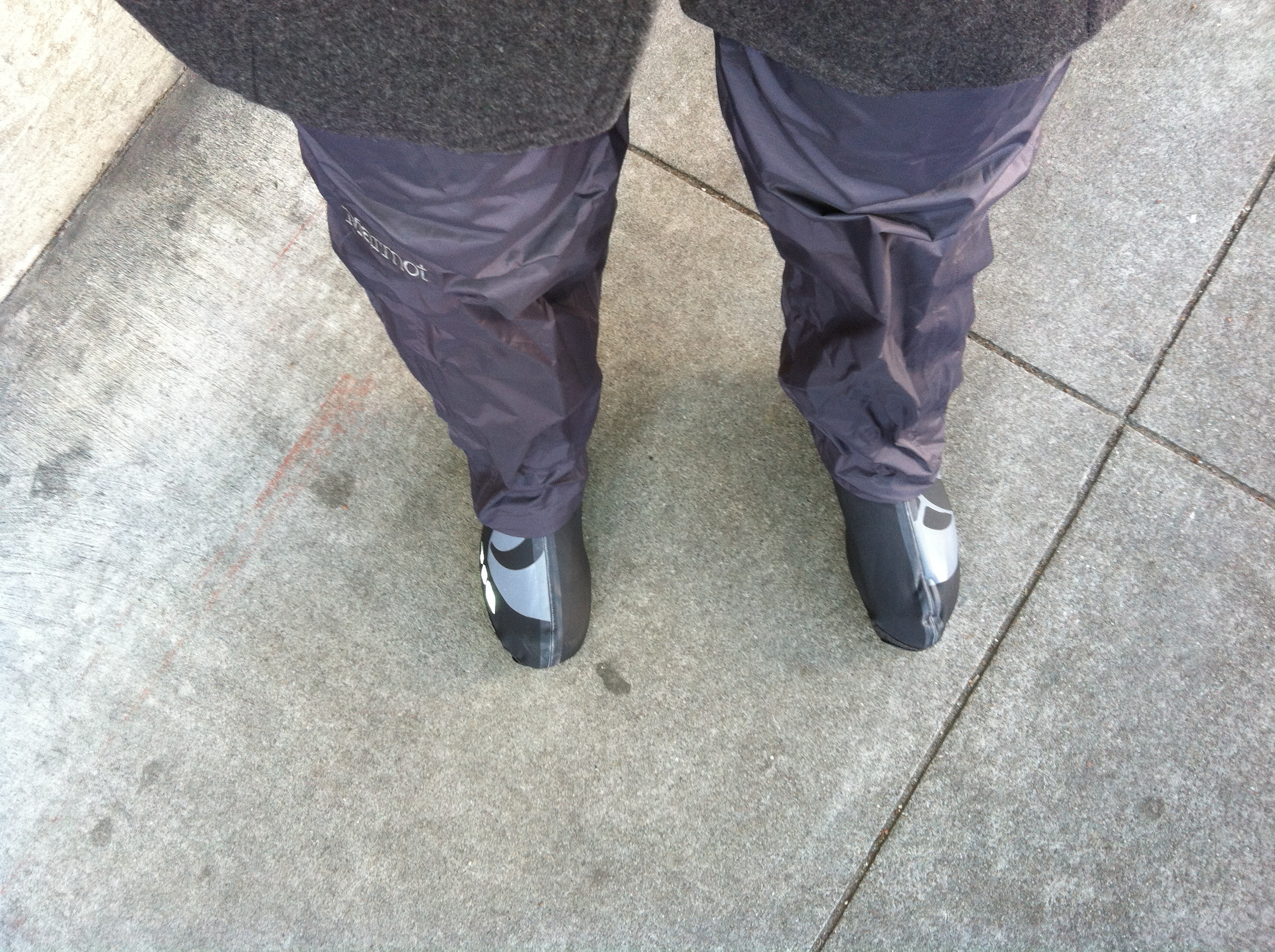
Rain pants, rain boots. Not seen: dress pants, merino wool long underwear.

Rain pants, rain boots. Not seen: dress pants, merino wool long underwear.

And how did I dress today when it’s 30 degrees Fahrenheit (-1 Celsius, 272 Kelvin) in San Francisco? On the top: merino wool long underwear with a cashmere sweater over. On the bottom: merino wool long underwear and socks, with dress pants over them, and leather loafers. Outerwear: Long wool coat, cashmere scarf, silk balaclava, merino wool gloves, ski mittens, rain pants, and rain booties. The rain pants and rain booties are waterproof, so they also block all wind (that means I didn’t really need the long underwear for my legs, but the heat in my office is unpredictable so I wore them anyway). Is this total overkill? Absolutely. The result? I got overheated. I call that an unqualified success.

I am a total weather wimp, as mentioned, so I’m guessing that my ridiculous getup would keep a normal person comfortable at temperatures way below freezing. And everything that I don’t wear once I get to the office can be stuffed into my helmet when I get to work, so it’s space-efficient.

Ski mittens, not ski gloves.

Ski mittens, not gloves.

The insight to ditch biking gloves and jump directly to ski mittens comes from the many fine riding parents of Rosa Parks Elementary School. Thanks, guys.  I credit the family riders of Portland for the insight of wearing merino wool long underwear under everything, a tip I’ve passed on to my chronically cold mom, who is even more delighted than I am. Wearing rain gear in the cold is my personal innovation. I did it because I already had the rain gear, but as a windstopper the rain gear is unparalleled.

And that’s how I ride when it gets cold(ish) in San Francisco. I may look stupid, but I’m still having fun.

12 Comments

Filed under commuting, family biking, San Francisco

Growing up

Two kids in the standard Bullitt box, still

Two kids in the standard Bullitt box, still

We love having the Bullitt to haul our kids (and a lot of other stuff) around San Francisco, and I continue to be impressed that we can squeeze a 4-year-old and an 8-year-old into the standard front box with minimal squabbling. And with the rain canopy they never get cold or wet. Sometimes we don’t even bother to put on their shoes. However I began to wonder after a while whether riding in the box was possibly too appealing.  We got our son a geared bike for his birthday last year (a Torker Interurban, more on this bike later) when we realized that trying to get a single speed bike up the hills around our neighborhood was making him hate riding. For several months it seemed like we had waited too long. In combination with his general neophobia, he mostly ignored the new bike and asked to ride in the Bullitt instead. Our daughter loves her balance bike but was too short to get on the trailer bike or a decent pedal bike.

Ultimately I decided not to worry about it. I figured they’d want to ride more on their own eventually, probably when temperatures crept up in the spring, at which point we’d also have moved downhill. I find the riders who pull up next to us and shout “you should make them pedal!” beyond tiresome. Getting up to Parnassus Heights is no joke for strong and experienced riders, even with an assist, let alone little kids. How about I don’t tell you that you look stupid in lycra hotpants, and you don’t tell me how to get my kids up an 18% grade, mmmkay?

Weekend grocery shopping with scooter

Weekend grocery shopping with scooter

And yet. To my surprise, over the last month, both kids have decided that they want to ride on their own. Our daughter’s legs finally got long enough that she could hop aboard the Roland and actually turn the pedals (a side effect of getting a German trailer-bike that I hadn’t considered is that Germans are crazy-tall). Our son flipped a switch in his head one day and decided to try riding his scooter to the library, and realized almost immediately that scooters are much slower than bicycles. The next day he wanted to ride his bike instead.

Heading out on the Torker Interurban

Heading out on the Torker Interurban

So now on weekends we are a family caravan. Our son rides his own bike, and our daughter rides the trailer-bike hitched onto the Bullitt. Sure, she hasn’t yet completely mastered the idea that you want to move the pedals forward while going forward, but she can give a noticeable assist when she does remember. Our son, with much encouragement, finally realized that shifting into a low gear to go up hills is neither difficult nor shameful, and he is chugging up some pretty impressive grades. Aside from some trouble with braking on steep downhills (which I completely understand because I’ve been there) he is a capable and safe rider. The front box is now available for friends or groceries or library books, or we can put one of our kids and/or the little bike in there if the ride gets too long or cold or hilly.

It's hard to see, but Matt has a 4 year old and 2 year old in the front box as well as our daughter on the trailer-bike.

It’s hard to see, but Matt has a 4 year old and 2 year old in the front box as well as our daughter on the trailer-bike.

I expect that there will be some backsliding into the comfort of the Bullitt box when winter digs in, but I can see the future from here. We still have some logistics to work out, because the bus that takes our son to his afterschool program does not have bike racks (yet! In the meantime I have contemplated getting him a Brompton.) Sometime next year we’ll have moved to the bottom of the hill, and the prospect of getting home after a long ride will not seem nearly as daunting to them. And once we live on a quiet and flat street, our daughter can practice riding a pedal bike near home. I worried once that we’d have to coax them into riding, but they started when they were ready.

Eventually we won’t have to carry them at all. But we’ll keep the Bullitt, of course. I love that bike, and I hear that teenage boys eat a lot of groceries.

4 Comments

Filed under Bullitt, family biking, San Francisco, trailer-bike

Looking for a kindergarten in San Francisco?

Welcome to Rosa Parks

Welcome to Rosa Parks

If you’ve been reading here for a while, you may already have read one of my many paeans to my son’s school, which will also be my daughter’s school next year. Rosa Parks Elementary School and the San Francisco Bicycle Coalition are two of my favorite institutions in the city. I realized when we went to pick up a kindergarten application form today that I hadn’t mentioned that it is currently school tour season. If you are a parent facing down the school lottery in San Francisco, I hope you’ll consider coming to visit our son’s centrally-located program in Japantown. There are two more tours before kindergarten applications are due at SFUSD on January 21, 2014.

  • Thursday, December 5, 2013
  • Wednesday, January 15, 2014

The school is on a cul de sac at 1501 O’Farrell Street, and you can schedule a visit by calling Nanayo in the front office at (415) 749-3519. Parents meet on the lower yard during morning assembly at 7:50am.

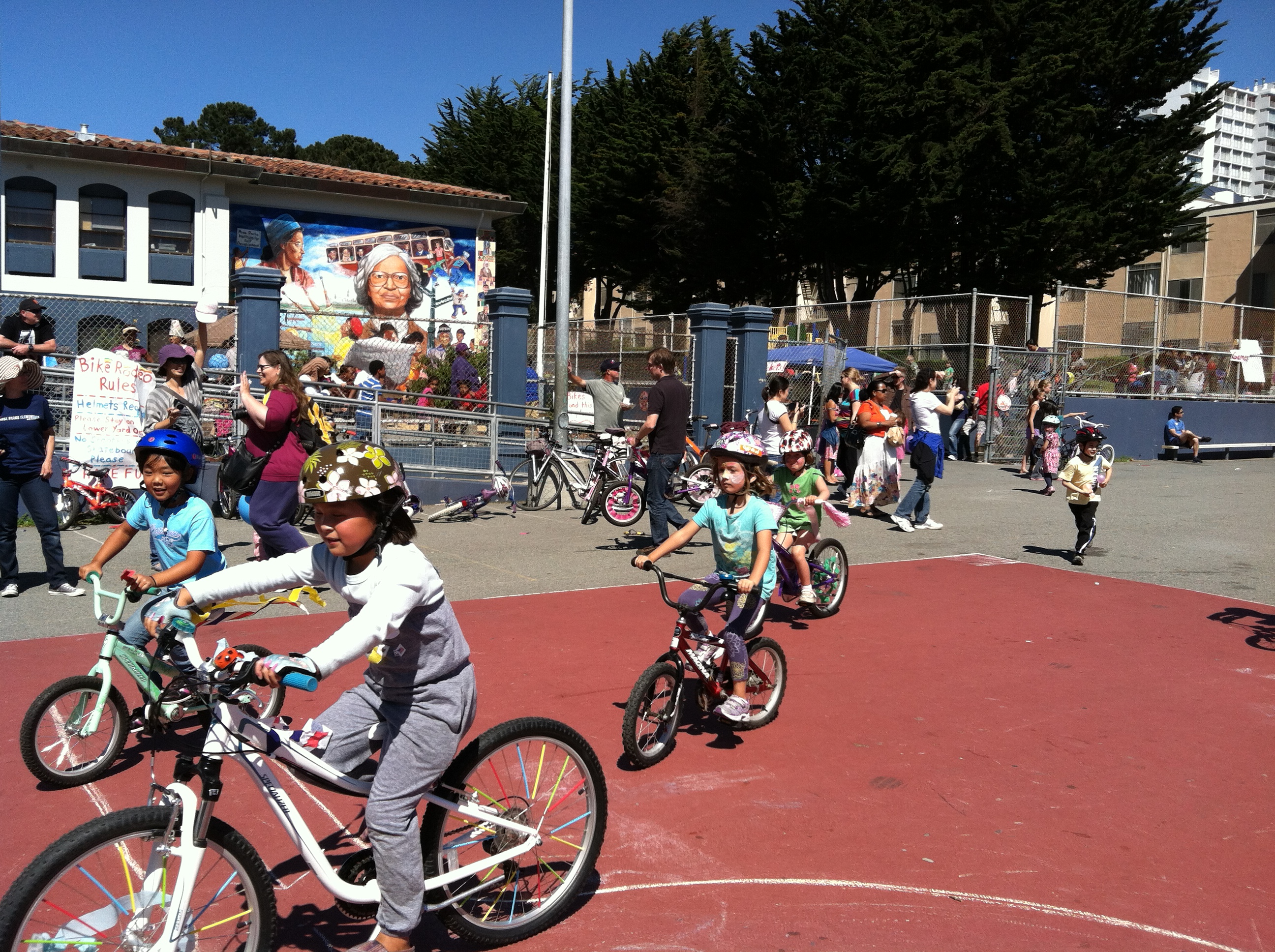
More of the bike parade whizzes by, and Rosa Parks smiles above it all.

The bike parade whizzes by, and Rosa Parks smiles above it all.

For a somewhat out-of-date and incomplete list of reasons we are so happy with the Rosa Parks Japanese Bilingual Bicultural Program, you can read a very long summary here. Rosa Parks JBBP is a citywide language program so there is no neighborhood preference.  Historically the school was laughably easy to get into—in the year we applied there were about as many applicants as kindergarten spots available—although applications increase each year. Back in 2009, it was a completely undiscovered gem of a public school.

Family bikes rolling in.

Family bikes rolling in.

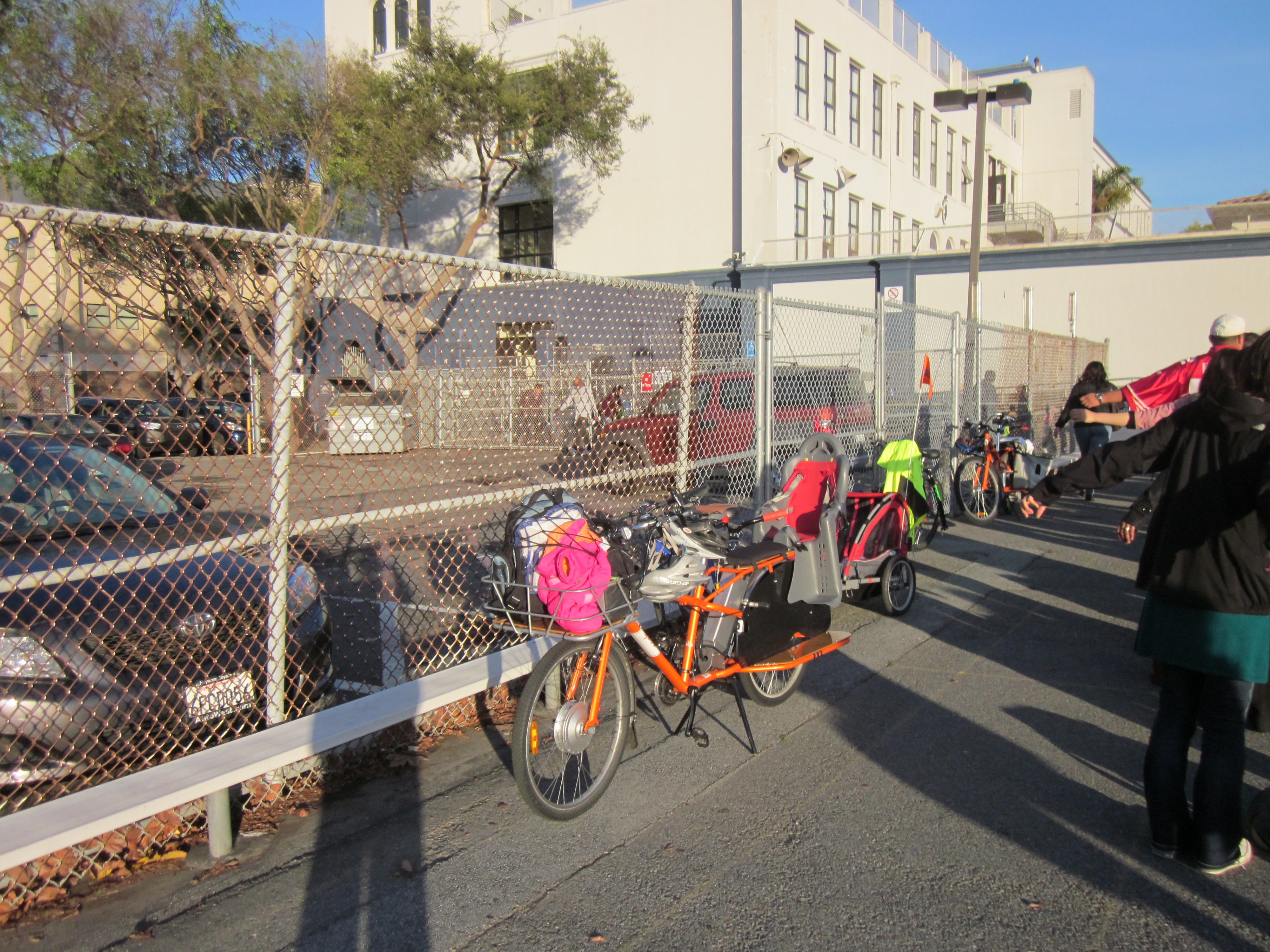
I’ve had child care issues that kept me from attending earlier school tours, but I plan to attend the final two tours (if I really get my act together I may even manage to bring some bike-related swag for visitors). So if you’ve always wanted to check out the Bullitt or the mamachari, this is a good chance. If you are already a biking family, you may catch us and other families coming up Webster the morning of the tour itself. Racks are available in front of the school and in the central courtyard in front of Raphaell Weill Child Development Center. If you’re a bike-curious family, feel free to check out the assortment of family bikes out on the yard.

Front racks

Front racks

San Francisco’s lottery system, whatever the stresses it places on families, offers a unique opportunity for people to find a school that fits their personality. Families at Rosa Parks tend to be friendly, easygoing and very involved with their kids’ education. And of course, a lot of us ride bikes. If that sounds like your kind of place, we’d love to meet you!

Leave a comment

Filed under family biking, San Francisco

Back to zero (waste)

The pantry

Our pantry (it feels weird to post a picture of our kitchen shelves)

Our zero-waste effort suffered some setbacks when I was injured. In general I’d argue that once it’s established, zero waste doesn’t require additional effort or time, and it’s certainly cheaper. The transition is a hassle—so if I were going to do it again I’d do it on a replacement basis, where when we ran out of one thing, we replaced it with a less wasteful alternative—but whatever weird stuff you do, once it’s familiar, acquires the easy grace of any other habit.

But Matt didn’t have the same shopping habits and haunts that I did when I was incapacitated. There was a lot of takeout, and although takeout pizza boxes are compostable, even our kids won’t eat pizza forever. Moreover, the in-home physical therapist who came to work with me twice a week brought a collection of disposable medical supplies (gloves, bandages, thermometer covers). And we certainly weren’t going to turn down any of the gifts of food or anything else people brought us, no matter how they were packaged. We were just grateful to have them.

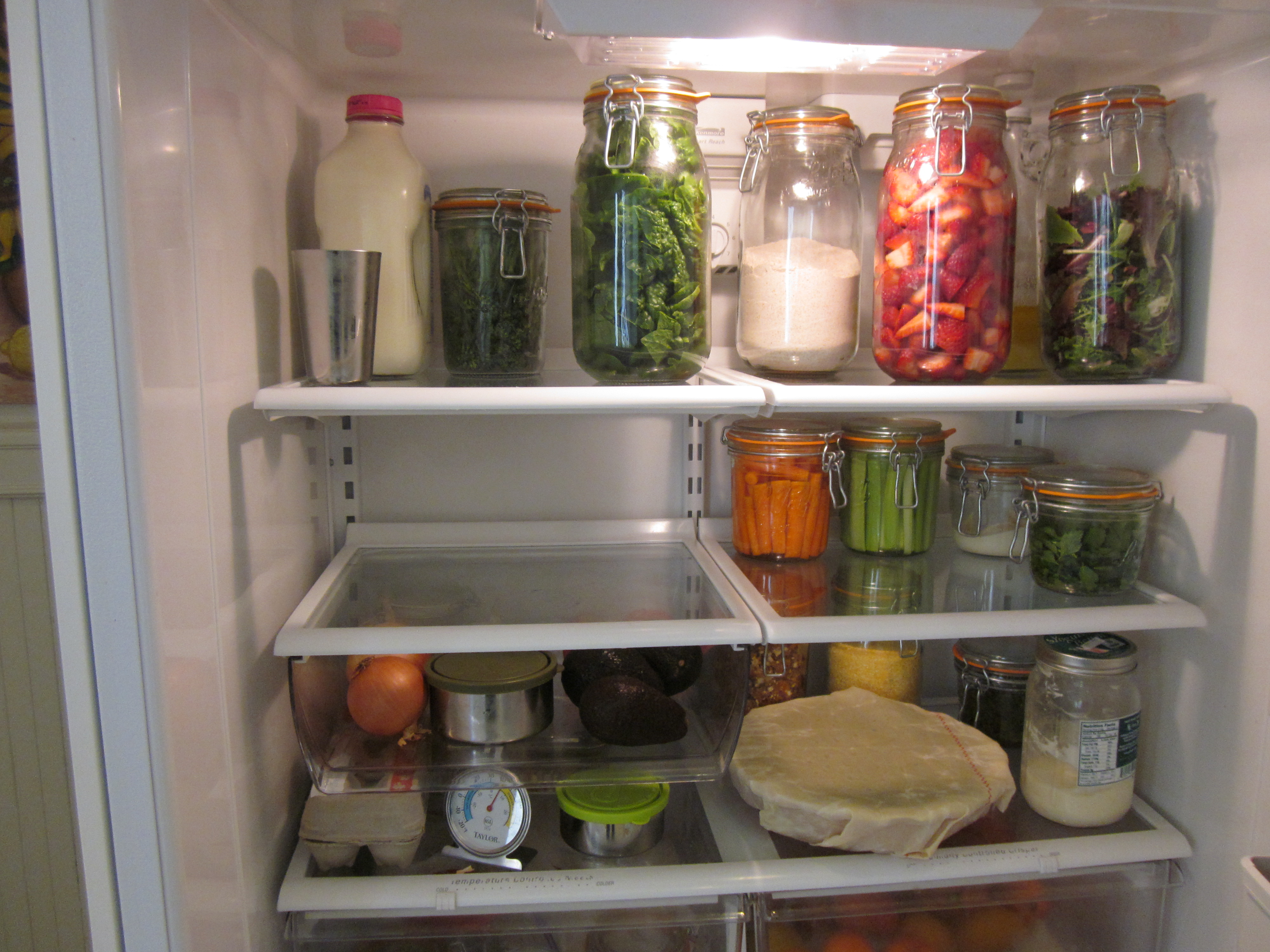
The fridge (the empty shelf usually holds lunchbags)

Our fridge (the empty shelf usually holds lunchbags)

Now that I’m more of an independent person again, I’ve been slowly rebuilding the zero waste muscles along with the ones in my leg. Despite the setbacks, though there were two big gains. The first is that our daughter changed preschools to a Japanese immersion program. Although this preschool is crazy with the art projects (and with music and dance; it is totally awesome), unlike the old preschool they eschew stuff like foam stickers and stick primarily with recyclable materials. There is an occasional plastic bead necklace, but overall our weekly landfill haul no longer has a lot of art piling up.

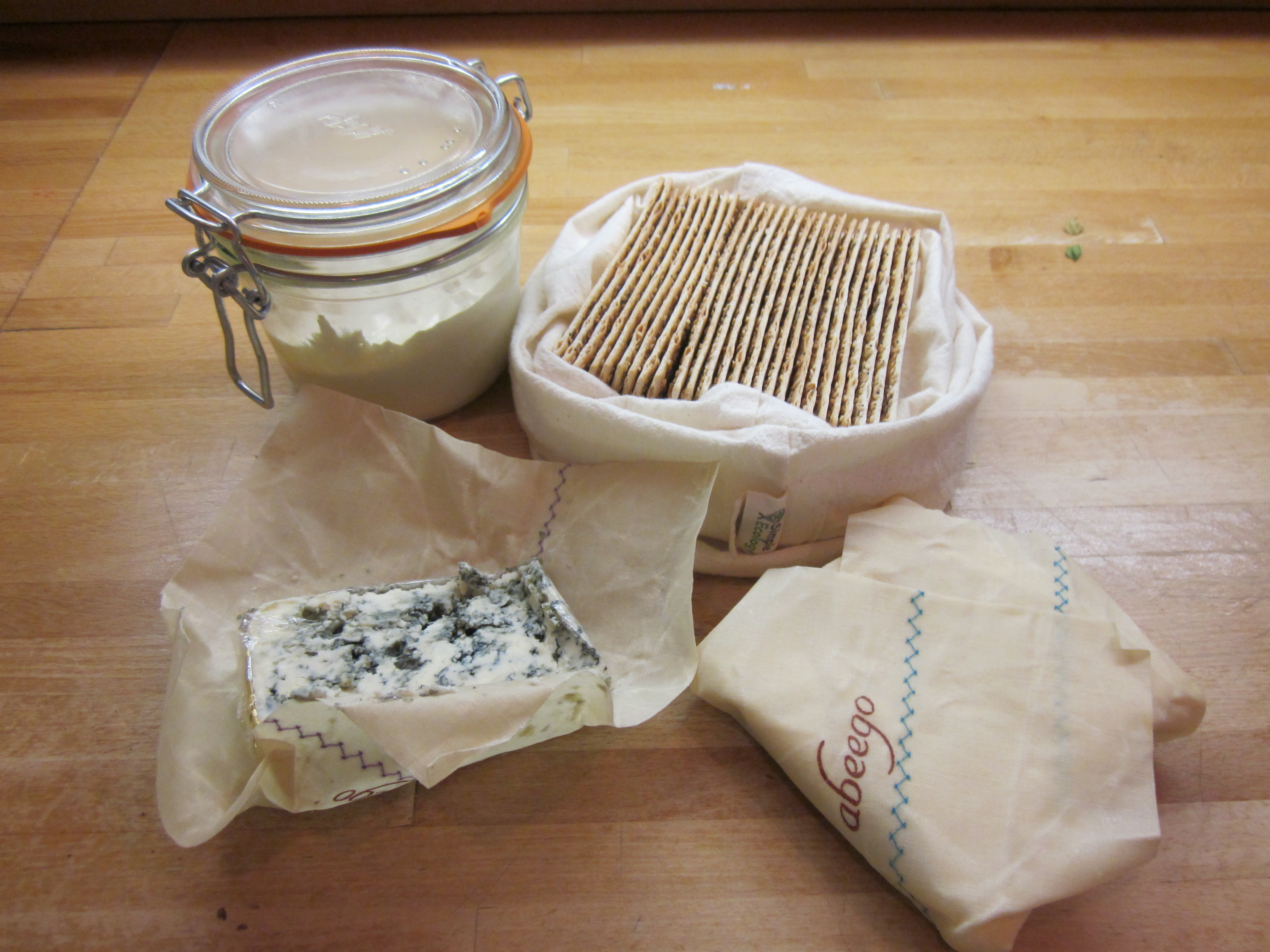
Our cheese shop is delighted to use our containers for hummus, crackers and cheese. All we had to do was ask.

The local deli is delighted to use our containers for hummus, crackers and cheese. All we had to do was ask.

The second is that I discovered there is a way to recycle a limited amount of soft plastics in San Francisco. I have mixed feelings about plastics “recycling.” Even though I know better, it is easy to grow complacent about the fact that we can chuck a fair bit of plastic into the recycling bin. I know full well that it’s not really being recycled, but there are days when I’d prefer not to think about that. On the other hand, there are some things, like my contact lens solution bottles, for which there are no easy substitutes. I’m pretty sure that it’s better to down-cycle those plastic bottles into fleece than to throw them into a landfill. I try to be mindful and not go nuts with it.

In hindsight it astonishes me that we once used plastic bags at the farmers' market. They give you hefty (unannounced) discounts if you bring your own bags.

In hindsight it astonishes me that we once used plastic bags at the farmers’ market. They give hefty (unannounced) discounts if you bring your own bags.

So anyway, Cole Hardware in San Francisco recycles a small amount of soft plastics for members of their buyer club (free, and worth joining for the great coupons, which I used to build up our collection of pantry jars). There are restrictions in terms of amount and condition. Bags must be clean and free of food waste—otherwise they’d attract vermin—and you can only bring one small bagful per visit. I called and asked them about it, and they are sending them to the one place I’ve ever heard of that turns plastic bags into more plastic bags. That is an interesting business. Recycled plastic bags, despite being a more sustainable alternative than virgin plastic bags, are not very popular. Thanks to the many colors of bags that are sent for recycling, the end product is always a brown or grey plastic. Unfortunately people and businesses who buy plastic bags typically like them to be clear or white. Recycling is often one of those business concepts for which there is more supply than demand.

Weird bulk stuff is where Rainbow Grocery really shines. Nearby are things like bulk honey, vinegar and fresh pasta.

Weird bulk stuff (miso, tahini, almond butter) is where Rainbow Grocery really shines. Nearby are things like bulk honey, vinegar and fresh pasta.

I am no fan of soft plastics, but I’m glad that they’re doing this. We occasionally get packages wrapped in plastic, or buy something with a surprise plastic wrapper inside a paper or glass container, and being able to save those for our next visit to the hardware store feels better than just tossing them.

This is the bulk section at one of our local grocery stores (smaller than most of them, but useful in a pinch).

This is the bulk section at one of our local grocery stores. I had never really noticed it before this year.

At this point we have gotten most of the easy stuff under control. We shop in the bulk section with reusable grocery bags and jars and get most of our produce sticker-free at the farmers’ market. We compost what we can, recycle what we can, and with the help of the Cole Hardware soft plastics recycling program, have shrunk our landfill waste to whatever mystery-material junk our kids pick up at school or off the sidewalk, plus a few synthetic rubber bands. Food-related waste, it turns out, is pretty simple, and our kitchen has never been more uncluttered. Don’t buy takeout or processed foods, and when in doubt, have a salad. We put a pot of (bulk) beans in the oven every Saturday morning, throw every leftover vegetable in the fridge into a soup on Sunday night, and divide them both out over the week’s dinners. That right there is the reason zero waste is the world’s most effective diet, and also why it can be done on less money than a California family can get in food stamps. Unfortunately people who really live on food stamps rarely have the kinds of shopping options or resources to store fresh foods that we do. But given that we do, it seems ungracious not to use them.

This is part of Rainbow Grocery's bulk bath and body section, which definitely makes life easier.

This is part of Rainbow Grocery’s bulk bath and body section, which definitely makes life easier.

From that point things get harder, even though we buy used when we can. The bathroom is a thorn in my side. We buy soaps and shampoo and conditioner in bulk, but our kids come home with band-aids and we’re still tossing non-compostable dental floss. (I tried to buy a carton of compostable silk floss and got sent a carton of non-compostable non-silk floss. When I complained, the seller refunded our money and told us to keep the carton as an apology. So we are working our way through it.) There are recyclable and compostable toothbrushes and we use those. Tom’s of Maine will recycle their empty toothpaste tubes if you send them back, so we do that too. But there are still dribs and drabs of stuff that trickle through. We are at the point where we’d have to put in a lot more effort for incremental gains, and I wonder whether that is the best use of our time.

Lots of things are available in bulk, once you start looking for them.

Lots of things are available in bulk, once you start looking for them.

The fundamental problem is that we live in a society where waste is the default option. It requires a certain mental effort and thoughtfulness to push through that. When I do there’s usually a lower-cost and lower-effort option, which makes sense. (That could be said of many things, another obvious one being the ostensible point of this blog, which is technically about alternative transportation. But once down that rabbit hole one tends to drift a bit into other counter-cultural stuff–although not yet to Burning Man!) Waste is presented as the default option because it’s a way to sell more stuff. But we don’t have to play along.

8 Comments

Filed under San Francisco, zero waste

A reliable bike

The Bullitt+Roland heading out to Great Highway's Sunday Streets last weekend. They saw lots of friends.

The Bullitt+Roland heading out to Sunday Streets

The things that I write about on the blog are only a portion of what’s really happening. This is a problem inherent to life, I think: you get so busy living that there is only so much time to talk about it all. This can lead to some false perceptions. One that’s come up lately, I’ve realized, is the sense that the Bullitt spends a lot of time in the shop. That’s not really true. It’s just that the times it goes to the shop it really ticks me off. After almost a year the Bullitt has been impressively reliable, with only a couple of exceptions that are, frankly, the result of our ignorance.

The first exception relates to the gearing. I have an aversion to pinning up my pants to keep them from getting caught in the chain, although I’m getting over it. The standard setup on a Bullitt is a triple front ring, which is great for hauling up hills, but as many riders already know, is basically incompatible with a chain guard. So when we bought the Bullitt, we put an internally geared front hub on it, the FSA Metropolis Patterson crankset.

The Metropolis is unquestionably cool, and you won’t need to roll up your pants. Unfortunately, it is not built to withstand the kinds of loads and riding we do. It is very sensitive to people doing things, like, say, pedaling over a speed bump and smashing unexpectedly into a hidden pothole on the far side, or to a rider shifting down after hitting a quicker-than-expected red light with a fully loaded cargo bike and then pushing off on a steep uphill from a dead stop.  These are not what I would call conventional bicycle riding situations, unless of course you are a family living on a steep hill in San Francisco, in which case they’re like daily rituals. So we broke the Metropolis. Twice. After the second time, we replaced it with a triple front ring, which withstands anything we throw at it (and if it didn’t would be cheap and quick to fix anyway). That wasn’t particularly expensive, but it was very time-consuming.

I miss the Metropolis, because it shifted like a dream when it wasn’t broken and had a lot of range, but it was not to be. In the meantime, I’ve learned to embrace skinny pants. Sure, they may not be the most flattering look, but they don’t catch in bike chains and they are wonderful at compressing a broken leg that tends to swell up at the end of the day. Although maybe that’s just me.

Hanging out with the Rosa Parks bike fleet

Hanging out with part of the Rosa Parks bike fleet

The second exception came up pretty recently. The Bullitt went back to the shop for another time-consuming repair when we broke over a dozen spokes at once on the rear (BionX) wheel. This turns out to be a BionX and San Francisco-related thing (San Francisco is hard on bikes). The first time we didn’t realize what the issue was so we had the bike shop replace the spokes and re-true the rear wheel. The folks at The New Wheel were the ones who warned us that it would happen again unless we put a stronger rim and spokes on that rear wheel. One week later, we learned how right they were when three of the new spokes popped. That’s a lesson to all of us, yes? Go to the pros with your electric assist bike! So we took the Bullitt back to the shop and now we have a thicker rim and spokes and they are hanging in without incident. This was pretty cheap, but once again, time-consuming.

There have been other odds and ends, but they don’t affect our ability to ride the bike. Matt dropped the BionX controller and destroyed its display, which now looks like something out of a slasher film. It still works, though. One of the fiberglass poles holding the rain cover has split twice—the first time probably due to the combination of wind sheer and the kids messing with it, and the second time due to some drunk baseball fans snapping it in two. Splendid told us how to order spare fiberglass poles, which are now sitting in the garage for the next time it happens. I think they cost $15. If you happen to have obnoxious sports fans roaming your neighborhood, you too may want some spare poles.

The two big repairs represented several weeks in the shop taken together, and those messed with our lives. The Bullitt has become what our car used to be, and we use it almost every day. I wrote about those incidents because they were such an unpleasant shock—with the Bullitt our lives are pretty easy and without it they start to derail.

Two kids in the standard Bullitt box, still

Two kids in the standard Bullitt box, still

But it did not fail it when we needed it most. All last summer while I was bed-bound for 23 hours a day, Matt used it to carry both kids to school and preschool and summer camp. At the time, our daughter was still attending preschool on the top of Mt. Sutro, and our son’s summer camp was up one of the toughest hills we have ever had occasion to ride regularly (9th Avenue from Irving to Ortega, for locals reading along). And although there were days that we needed to call in friends for a carpool or a family member to walk someone home, mostly Matt managed all of that extremely grim summer solo. So how can I hold a crankset and some broken spokes against the Bullitt? Especially when I know they won’t happen again? Also, Matt is awesome.

We started this year knowing that there was trouble in the wind. The university decided to kick everyone out of faculty housing, our daughter’s preschool, disastrously, was taken over by a for-profit corporation, and the campus where I work was scheduled for closure with everyone on site told we would move “somewhere.” As bad as all of that was, we could not have predicted how much worse it would get when I was run down by a distracted driver in April. For a week we assumed that our car-free days were over. But with my right leg shattered it turned out that I couldn’t drive either, so here we are. I’m riding again and the Bullitt is still hauling the kids. I can’t yet do everything that I used to do, but the bus and rideshare make up the difference.

Thinking about future careers at preschool

Thinking about future careers at preschool

And in other ways, we seem to have turned the corner. In July our daughter started at a new preschool, a Japanese immersion program that is a feeder for Rosa Parks. She loves it so much we have to drag her home every evening. The office move keeps getting postponed another couple of years into the future. University housing can’t kick us out as long as I’m disabled, but we have other progress on that front as well. I am walking again, and people tell me my cane looks badass. We’ve been taking long weekends with the kids to try to make up for their having such a bummer of a summer–the other week we camped in a (handicapped accessible) yurt, and we’re headed to the coast this weekend. It’s been one hell of a year, and it’s not over yet.  But life is a little easier with a reliable bike.

8 Comments

Filed under Bullitt, car-free, electric assist, family biking, injury, San Francisco

Where’s your helmet, mom?

He can remember a stick and headlamp for a camping trip, but remembering jackets or a bike helmet: boring.

He can remember a stick and headlamp for a camping trip, but remembering jackets or a bike helmet: boring.

The other day when I picked up my son at his after school program, he ran over and started to hop aboard. “Where’s your helmet?” I asked. “Uh…” he said. “I guess I left it at school.”

This is not the first time that’s happened. Kids forget stuff. In the first year of kindergarten our son lost so many jackets we finally lost all patience and sent him to school in shirt sleeves in January (recall that we live in San Francisco: he was chilly but we’re not monsters). At that time, he was taking a school district bus to his after school program and they took all lost items to their central facility on the southeastern edge of the city. Those jackets were gone forever.

Our problems are compounded by the fact that his dad drops him off, and then he goes to an off-site after school program where I pick him up, but it happens even when we pick up our daughter, who stays in the same location all day but is missing one sock at pickup three days out of every five.

So what do we do when our kids forget their helmets? We take it on the chin. California has a helmet law for kids but not for adults, our kids have giant heads, and our helmets are adjustable. I give my son my helmet and I go bare. I don’t like doing this, AT ALL—I mean, I’m still recovering from being run over and I am basically still the world’s most paranoid bicycle rider—but it’s often the best of the available options. Some of our bikes fit on a bus bike rack, and we have done that once with a forgotten helmet, but it takes an extra half hour that we don’t always have.

As a parent, though, handing off your helmet to your kid for the ride home is a guaranteed ticket to heckling. People stop next to me and yell, “Where’s your helmet, mom?!? COME ON!” And I always reply wearily, “He left his helmet at school so I gave him my helmet.” And they say, “Oh.” But I know there are hundreds more people who say nothing right then but remain righteously indignant that there are parents! Who don’t wear helmets! Setting a bad example! On the streets! WHAT IS WRONG WITH THESE PARENTS!!! I see them at community meetings and they sure do fire up the internet.

We notice the world when walking to school too, like these carvings in Japantown.

We notice the world when walking to school too, like these carvings in Japantown.

Being on a bicycle sometimes means that you can’t hide from your surroundings. That’s often a good thing. I like riding a bike in part because we’re engaged with the world around us. I like being aware of the weather outside, even if that means wearing rain gear. But while parents in cars don’t have to reveal that they forced a screaming toddler into that car seat or that they forgot the booster seat for the friend who they promised to take home, on a bike there’s no way to keep the world from seeing, and a lot of people don’t shrink from sharing their opinions. I don’t care about it that much, but at the end of the day when I am already tired, the judgment can get old. I don’t peek in car windows and criticize other people for putting a five year old in the front without a car seat, so it would be nice to get a break on the days my son forgets his helmet.

We live in a country where it seems normal that a kid on a balance bike at Sunday Streets would wear a helmet. I would like that to change.

We live in a country where it seems normal that a kid on a balance bike at Sunday Streets–where there are no cars–would wear a helmet. I would like that to change.

It would of course be even better to live in a place with safe infrastructure like a network of protected bike lanes, and laws that protected vulnerable road users, and 15mph speed limits, so that we wouldn’t even need helmets. But who am I kidding.

5 Comments

Filed under commuting, family biking, injury, San Francisco

The underrated Kona MinUte

The same bike, but different

The same bike, but different

Although I have some issues with our original cargo bike, the Kona MinUte, they are mostly along the lines of “this is a good bike that with a little bit more effort could have been a GREAT bike.” If I were a betting person, I would bet that the MinUte is a product that is only really loved by one person at Kona, which as a company seems to focus more on what another family biker once referred to as “the weed market.” I wish this were not the case, but in the meantime, Kona pioneered the first American midtail, and what a great idea that turned out to be.

So I was very disappointed to learn that Kona is discontinuing the MinUte at the end of 2013. I recommend the Yuba Boda Boda to parents looking for an assisted midtail in San Francisco (that’s mostly moms), with the usual caveat about Yuba’s lower-end parts. I recommend the MinUte to parents looking for an UNassisted midtail in San Francisco (that’s mostly dads), with the usual caveats about the MinUte’s historically horrible brakes. There a couple more midtails out there, but to date I have not yet ridden a Kinn Cascade Flyer, so I can’t comment on anything but its smokin’ good looks one way or the other. And the very sturdy Workcycles Fr8 is not appropriate for our hilly neighborhood, plus it is too heavy for bus bike racks on local transit, so it loses one of the key advantages of owning a midtail. On the other hand, if you live somewhere flat, the Fr8 is the only midtail specifically designed to haul three kids, one of whom can be in front, which is delightful.

Although it is not a company that is focused on the kid market, Kona does some things really, really well, and one of them is gearing. The MinUte is geared like a mountain bike, so yes indeed you can haul your 50+ pound kid up really steep grades on this bike. And with an aluminum frame, the weight of the bike isn’t fighting you all the way up those hills. To the best of my knowledge, there is no other cargo bike with the same weight+gearing advantage currently on the market. RIP, MinUte. If you’ve been thinking about getting one, you’d better hustle.

Rosa Parks family with a very stylish 2013 MinUte tricked out for kid-hauling

This very stylish 2013 MinUte belongs to a Rosa Parks family and is completely tricked out for kid-hauling

The things that irritate me about the MinUte would probably be irrelevant if the family cargo biking market hadn’t taken such great leaps in the last few years. Now you can buy a bike that comes with kid-carrying parts designed for the bike. Workcycles, Xtracycle, and Yuba will not let you down on this front, and that makes their bikes inherently more appealing for a parent picking up cargo biking. Getting a MinUte involves some kludging that feels a little old-school now. If you live near our bike shop, Everybody Bikes, or one like it, they’ll do that for you, because they’ve set up so many of these bikes already, but otherwise you’re on your own. Kona does not have a standard set of stoker bars for kids to hang on to, wheel skirts to keep feet from being trapped in the spokes, or pegs for foot rests. If you buy a MinUte from Everybody Bikes they’ll set up you up with all of these things on request, and it will look really good too, but that’s their initiative and not Kona’s.

But we live in a hilly neighborhood near this particular bike shop, so it’s not just us on a MinUte: we have neighbors with MinUtes as well, and one family joins us at Rosa Parks every morning—how cool is that? For parents with one kid or two widely spaced kids, a midtail is probably the best kind of cargo bike. Granted, you don’t really need a cargo bike with only one kid, but it can be handy—I find a midtail less unwieldy than a bike seat with an older child, plus you can carry more non-kid cargo. Matt likes the MinUte’s carrying capacity so much that he plans to keep riding it after our kids are on their own bikes. Assuming, that is, it is not stolen again after Kona stops making them, which would break our hearts.

And as mentioned, most midtails can go on a bus bike rack, or on Amtrak using their standard bike racks. Score! Lifting them up to a bus bike rack is not without its challenges—the MinUte, which is the lightest one I’ve tried to put on a bus, is definitely a lot of work to position, but eh, there are lots of heavy bikes in the world, and in my own personal case, my arms are not the weak link.

This neighbor DIYed a nice kid seat with a wooden back, which is drilled directly into the wooden deck.

This neighbor DIYed a nice kid seat with a wooden back, which is drilled directly into the wooden deck.

When we got the replacement MinUte, we learned that Kona had not ignored all of the issues that came up with the first year’s model. The MinUte now has a much nicer centerstand than before, only a fraction narrower than the best-in-class Ursus Jumbo at half the price. Kona now allows you to swap out the standard wooden deck for a plastic deck with holes predrilled to hold a Yepp seat. I’ve been told that the standard brakes are better. The bags are still not so great, but hey, they are included in the price of the bike, so it’s hard to complain too loudly about that. Again, it’s really more a good thing that could have been great.

We will miss being able to tell people where they can buy a MinUte like ours—although the Bullitt gets the most attention, all our bikes are kid-haulers, and as a result they all get noticed. I wish Kona were willing to jump into the family market wholeheartedly. The MinUte fills a niche for families in hilly cities and I’m not sure there’s another bike out there yet that can do the same thing. But Kona is discontinuing the MinUte, so I will have to hope there is something new in the works.

19 Comments

Filed under commuting, family biking, Kona, Xtracycle, Yuba, Yuba Boda Boda

The deceptively “empty” bike lane

New building with old exhibits.

New building with old exhibits.

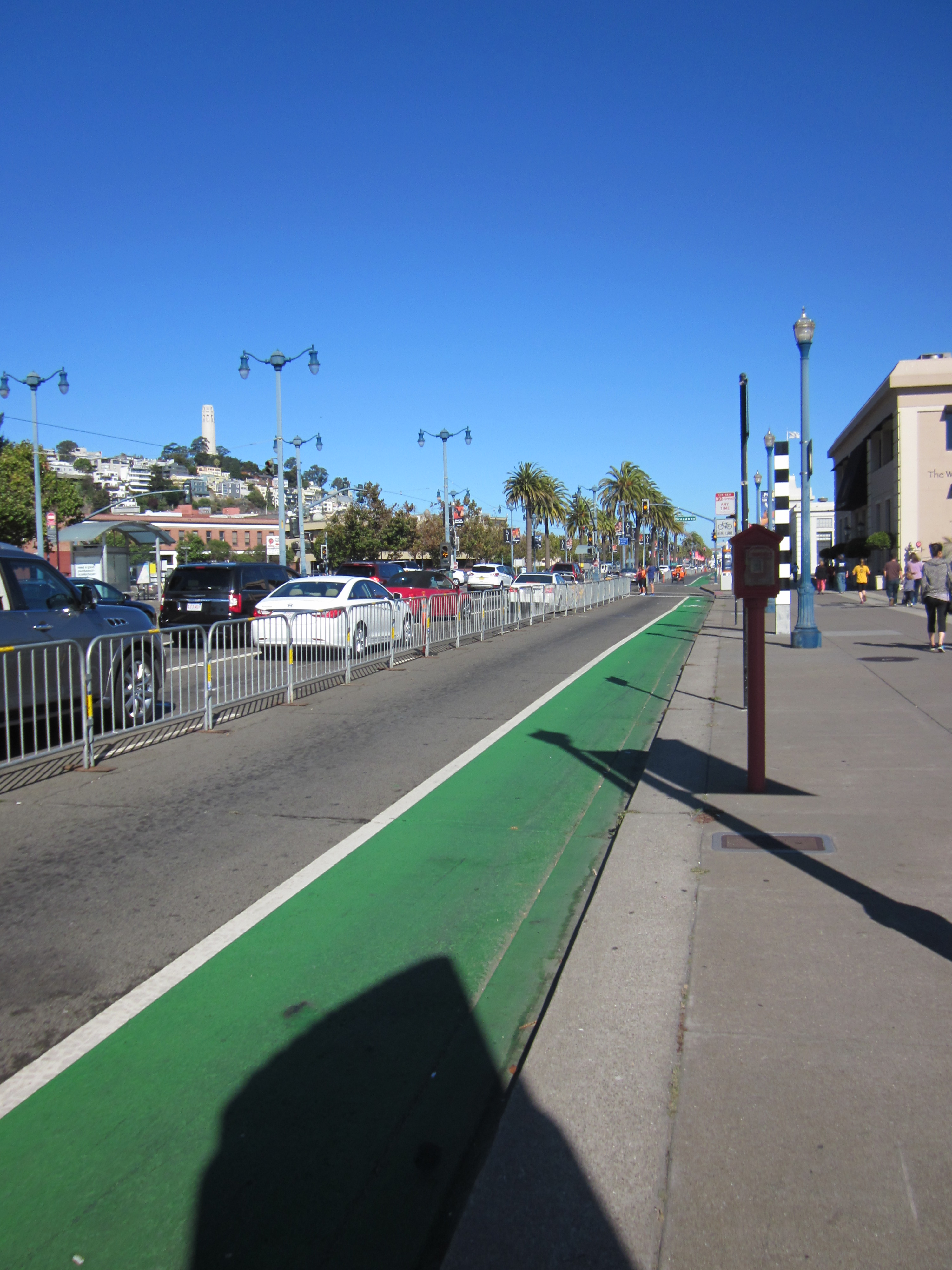
This weekend we headed to the new Exploratorium. Because the Bullitt is in the shop with broken spokes (sigh), we took Muni.  That meant an unusual amount of walking for me, all the way from Embarcadero station to Pier 15 and back. It would have been a much better day to ride, both because the weather was outstanding and because the Embarcadero bike lanes had been expanded for the weekend due to the America’s Cup. And it would also have been a better day to ride because I still can’t walk very far on my bad leg so I passed out in exhaustion as soon as we got home. Such is life. I have no stamina.

Watching the traffic along the Embarcadero was fascinating, and because my kids are even slower and more easily distracted than I am, I had plenty of time to think about it.

One painted lane and one temporary lane with barriers

One painted lane and one temporary lane with barriers

A while ago I read a fantastic book, Human Transit, which talked about how irritated drivers can get seeing “empty” bus rapid transit (BRT) lanes during car traffic jams. The perceived emptiness of the BRT lanes leads solo drivers to complain that these lanes take away capacity for solo drivers for no good reason. But as Walker (the author) points out, the “empty” BRT lane typically allows a fully-loaded bus to pass at least every five minutes, carrying 50-100 passengers apiece. Drivers see BRT lanes as “empty” because they are stuck in place, but their perception is flawed. Taking away the BRT would trade an hourly throughput of 600-1200 (at worst) people on buses for an hourly throughput of a few dozen people in automobiles (at best). Having the lane clear enough that buses whiz through uninterrupted is what makes BRT work.

Of course, buses aren’t full all the time. However they are almost always full when traffic is backed up, and no driver cares how many buses are in a BRT lane if private auto traffic is moving quickly. If moving people around is the goal, then pretty much every street that ever has a full bus should have a protected BRT lane. At which point more people will want to ride the bus, which would further reduce private auto traffic: it’s a virtuous circle. Everybody wins! The city is now providing less traffic for solo drivers and quicker trips for transit riders. Yet because of the false perception that the lanes are always “empty” installing protected BRT lanes has been incredibly controversial.

Rider approaching and moving fast; cars stopped dead

Rider approaching and moving fast; cars stopped dead

I thought about this as I watched drivers in cars fume in traffic on the Embarcadero, glaring at the usually-for-cars lane that had been removed to make a two-way (mostly) protected bike lane. To people stuck in the abysmal auto traffic along the Embarcadero, the bike lane looked “empty.” Early in the morning, when we were there, a bike (or group of bikes) passed northbound roughly every ten seconds, though that’s an average—sometimes a minute would pass with no bikes, then there would be a handful, etc.

Weekend riders--bikes with trailer-bikes.

Weekend riders–bikes with trailer-bikes.

The bikes passed much faster than we could walk, but because of the traffic we were walking faster than the people in cars. In about a half-mile of watching northbound traffic, I saw cars reach stop lights, lurch forward into the next clump of traffic, then wait several light cycles to get to the front of the line, and then repeat. I estimate that about 30 cars got as far as we did in 20 minutes—the same cars I saw when we started our walk. In the same amount of time, a northbound bike passed every 10 seconds, so that one bike lane moved 120 bikes. Now if you assumed that all those cars were holding four people (you would be wrong, most were solo drivers), that would mean that at 9am on a Sunday a single “empty” bike lane was moving as many people as multiple lanes dedicated to private auto traffic. However the cars were mostly filled with 1-2 people, even on a weekend. Moreover, weekend bike riders tend to be more family-oriented, so probably a quarter of the bikes we saw were hauling 1-3 kids in addition to the rider (the 3-kid bike was a BionX Madsen!) So the comparison is really more like throughput of:

  • 50 people in cars using 3 lanes vs.
  • 150 people on bikes using 1 lane.

And this was early in the morning—on the way back I gave up trying to count bikes because there were so many more of them in the lane by lunchtime. Car traffic was, if anything, more abysmal.

This BionX Madsen was assisted by The New Wheel over a year ago and has its own Facebook page.

This BionX Madsen was assisted by The New Wheel over a year ago and has its own Facebook page.

The irony, of course, is that these incredibly desirable “empty” lanes are public. They’re available to anyone who wants to use them. All you have to do is get on a bus or a bike—and if I can carry my kids on a bike even with a gimpy leg, and a senior on an oxygen tank can ride a trike while hauling his oxygen tank, and a man with no legs can hand-wheel his way along the same path, I have to think that nearly anyone can manage one option or the other. Really, the only way to take away the freedom to travel uninterrupted is to give that “empty” lane to cars.

4 Comments

Filed under advocacy, family biking, San Francisco, traffic